Showing posts with label MP3s. Show all posts

Wednesday, December 10, 2008

Hearing is Believing or Believing is Hearing?: Experimental Music


One of my MySpace friends is part of a band/musical project called Ear of the Rat, and listening to their work prompted me to think about experimental music and ask some important questions of myself that I haven't done in awhile. You see, Ear of the Rat produces highly experimental pieces, some more accessible than others, and provides them all for free download. Are these people the true artists? They aren't doing it for any financial gain whatsoever and they have uploaded their work to Open Source Audio, a site where music is truly shared for the creative good of everyone participating. But what is music as an art? Is all this endless criticizing, reviewing and proselytizing about music a load of rubbish in the end?

There have many experimental music projects, especially since advances in both communication and music production technology. The early 20th century saw French composer Erik Satie become the father of both ambient music and muzak. He called what he was doing "furniture music," and for him, it represented the aesthetic of boredom, music deliberately produced to be ignored. Then, decades later, John Cage pushed music in a different way by developing the I Ching into a strategy for making experimental music. Of course the likes of people like Brian Eno then took this concept further. In many ways, Ear of the Rat reminds me of early Pink Floyd (in fact, they do a version of Interstellar Overdrive) and The Velvet Underground with their seemingly endless experimentation and spontaneous musical "happenings." There's also something vaguely Ariel Pink about them. Like many bands from past and present, Ear of the Rat don't appear to have an agenda except to continue being creative. They plunder samples and ideas from other pieces and produce them as lo-fi as possible. What's one of the terms for music like that of Pink Floyd, The Velvet Underground, and Brian Eno? Art rock. Isn't all music art? At what point does it become sufficiently "arty"?

Whenever I think of aesthetics and questions of art theory, I'm reminded of Tom Wolfe's book The Painted Word, his criticism of modern art criticism. Essentially, Wolfe argues that the art came first and then the people in the ivory tower and at the top of the social ladder created a reason for it. In order to see a work of art, in this case a painting, there has to be a persuasive theory behind it. As Wolfe states, "Not 'seeing is believing,' you ninny, but 'believing is seeing,' for Modern Art has become completely literary: the paintings and other works exist only to illustrate the text." Isn't this what most pretentious art critics, including those who write in-depth reviews of music, work off? The potential to get bogged down in academic musings and theories when discussing art is massive. It's as though the world has said "art serves no practical purpose, thus it must be justified." In fact, every faculty of arts in university is dedicated to analyzing and developing meaning for things that can't be put to practical use. It is this kind of education that leads me to write babbling propositions like this about modern art. I've been effectively trained to look for meaning in everything, which while enlightening, may have also killed my ability to feel art for art's sake and nothing else. So, to attempt to answer my earlier question of when does music become art, I suppose music becomes art when enough people with influence agree it is. The modern art critic is the equivalent of the indie hipster.

Does theory and the meticulous extrication of meaning from art matter? Is it all part of experiencing art? Do I need to understand art before I enjoy it? Replace the word "art" with "music." Do the answers change? If pushed to answer, I would have to say that there are pros and cons to theorizing and understanding context. Back when I knew much less about music and its history, every album or artist I listened to sounded new and I responded to it on a purely emotional level without overthinking things. Now I find myself comparing the music I listen to with others and placing it in some sort of context for myself in order to evaluate its worth. Like the critics in Wolfe's book, I sometimes realize that I'm trying to make excuses for certain music and trying to understand why it should be considered valuable. Of course it becomes very reassuring to have the artists themselves come to me and say that I completely understood what they were trying to do (this has happened more often than I would have expected) - at least in those cases I know I didn't shoehorn them into some sort of pre-meditated framework. Oh, the occupational hazards of being a music critic, as amateur a version I may be.

Along with the pushing and testing the limits of genres and musical possibilities, artistic advancement has also developed alongside the capacity to participate and share in music creation; the line between listener and performer has blurred. A strong, and perhaps simpler, example of this process in action is Phil Kline's Unsilent Night, where people in a particular locale all bring out their portable stereos to blast whichever Christmas music they happen to have and walk through the streets together. Supposedly, the ever-shifting soundscape comes to represent community and a non-hierarchical performance in which everyone's ability to perform is equal. Musical communism in a way. Via faster computers and Internet service, sharing information, including music, has become possible at an unprecedented level. But aside from wholesale downloading of completed tracks and the sampling done in the hip-hop and electronic world, would all that many "regular" people bother collaborating on musical projects over long distances? Do artists need to bother? Isn't creating music always going to be an indirect collaboration anyway?

Art comes from art. It took me a relatively long time to learn that, but it's true. There's nothing original in this world, just original ways of re-assembling. To declare some band as utterly revolutionary is always a fallacy. They didn't create in a vacuum (and if they did, they may be suffering from the lack of necessary gaseous elements), so like John Milton said, plagiarism of a work occurs only "if it is not bettered by the borrower."

But does this highly experimental music have a chance at resonating more than a tightly produced four-minute track with that many people? There are times when listening to a twenty-minute track of noodling and improvisation that you start thinking this is what reading Finnegan's Wake would be like. If I'm completely honest, most of the music I own and listen to on a regular basis is accessible. I would say 90% of it is based on some recognizable semblance of musical structure and the songs are usually under eight minutes long. Is it pretentious to love and champion the music that pushes the limits so far that it becomes inaccessible just because it is inaccessible? I think it only becomes pretentious when you're not being honest about it.

I'm not going to attempt justifying Ear of the Rat's output, nor am I going to explain why I would likely listen to New Order or The Smiths more readily than Ear of the Rat, or even Pink Floyd for that matter. Nor am I going to worry too much about what that says about me as a music lover. I think there's a difference between finding a piece of music interesting and truly loving a piece of music; some music is meant to be furniture music for me. I admire artists like those in Ear of the Rat for doing the art they do for the reasons they do it for, but I don't want to fall into a "believing is hearing" state of mind. I live for those songs that I will never be able to explain my reactions to. It's that incommunicable connection with certain pieces of music that keeps me listening and believing.

Wind Cries Mary - Ear of the Rat

Interstellar Overdrive - Pink Floyd

Saturday, November 1, 2008

Read All About It


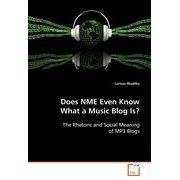
Through life's strange twists and online accessibility, my MA thesis, Does NME Even Know What a Music Blog Is?: The Rhetoric and Social Meaning of MP3 Blogs (see earlier post), is now available as a book published by VDM Publishing. That's the good news. The perhaps not-as-good news is the fact it is priced at $64 US - I have officially become a part of the artificially inflated academic book market. Currently, the only place where it actually appears to be in stock is on Amazon US and Target, and is listed, but not yet in stock on Amazon UK and Amazon Germany. I definitely don't intend to get rich from this, but at least it feels like I didn't sacrifice a chunk of my sanity for nothing, and I still feel the current technological climate of the music industry and its counterpart of music journalism is a fascinating area that needs far more exploration, academic and otherwise. It's exciting to think that I've contributed in some way to this global dialogue, especially since I couldn't find any secondary academic sources about MP3 blogs when I was researching. It's funny how, as a child, I always imagined my first published book would be a novel - then again, I also thought I'd grow up to be both a scientist and an artist.

At any rate, this will likely be the first and last time you'll find me tooting my own horn, so to speak. I'd much rather promote other people, which I suppose I did inadvertently in the book as I used numerous examples from MP3 blogs and their aggregators. However, as I tended to argue in the book, promoting others really comes down to some sort of self-promotion anyway. I'm ready to go back to the more imperceptible kind.

Monday, October 27, 2008

Sound the Last Post, Then Unite and Take Over


I, like many MP3 bloggers, am deeply disturbed by the information gathered on a post over at The Vinyl Villain. JC has collected links to the following posts that all address the current censorship and bullying that is taking place in the MP3 blogosphere:

To Die By Your Side Post
Song, By Toad Post
Teenage Kicks Post
17 Seconds Post

I encourage you to read them all because each of them provides a slightly different insight into the rash of MP3 blog post removals, specifically by Google's Blogger. I would also like to add a couple of my own links to relevant stories, including this story about Metallica and the Muxtape story. Now, as many of you know, I've been studying MP3 blogging with a fair amount of depth this past year, and as far as I could tell, most MP3 bloggers appeared safe from legal action because of the ephemeral nature of most download links, because of their disclaimers about asking for removal of MP3s, and because of the fact that as long as they posted only a few MP3s, and not full albums, they were operating under the following "fair use" clause of the Copyright Law:

"Notwithstanding the provisions of sections 106 and 106A, the fair use of a copyrighted work, including such use by reproduction in copies or phonorecords or by any other means specified by that section, for purposes such as criticism, comment, news reporting, teaching (including multiple copies for classroom use), scholarship, or research, is not an infringement of copyright. In determining whether the use made of a work in any particular case is a fair use the factors to be considered shall include—

(1) the purpose and character of the use, including whether such use is of a commercial nature or is for nonprofit educational purposes;

(2) the nature of the copyrighted work;

(3) the amount and substantiality of the portion used in relation to the copyrighted work as a whole; and

(4) the effect of the use upon the potential market for or value of the copyrighted work.

The fact that a work is unpublished shall not itself bar a finding of fair use if such finding is made upon consideration of all the above factors."

As evident through the above bloggers' stories, this safety net has been torn from under us. Now there are talks of blogs disappearing and/or going underground (ie: email subscription services), but what I fail to understand is what record labels hope to gain by attacking MP3 blogs. Have they heard of torrents? Is it because it's easier to target a bunch of relatively small static entities rather than massive networks whirling around the globe? To treat MP3 blogs and their offshoots as though they're the same as the P2P filesharing frenzy started by Napster in the late 90s, is utterly ridiculous. There are so many flaws in these actions on the part of both major record labels and Google, but I would like to point out a few pertinent ones.

Firstly, how can archaic copyright laws be applied to drastically new developments in technology? How can you steal something whilst leaving it with the person you "stole" it from? This process is one of cloning, not of physical products leaving one spatial location to be in another. And after being in academia so long, I know the copyright law well enough - of course you can't photocopy a whole book, but you can definitely copy portions that you need for your studies. The reason why this analogy doesn't quite work is because photocopying a book would be a lot more time-consuming than downloading and burning an album or several. But I would like to point out the fact that research and epistemological processes have been built upon the foundation of citation. You cannot write an academic piece of literature without references, citations and examples from previous works to bolster your argument. Well, MP3s are bolstering our arguments. We are not plagiarizing entire books, we are providing our examples. Consider our MP3 links to be inside quotation marks.

Ideas and art do not spring from a vacuum. This is the civilized world that literacy ushered in. Once thoughts and information could be recorded for reference, they could be easily used to continue building on, generating a sense of progress. Science and technology themselves couldn't have gone anywhere without the free flow and dissemination of information. Knowledge generates knowledge, and by preventing access to ideas and cultural artifacts, big businesses are only killing civilization as we know it. However, when you take a look at the history of communication, we are merely repeating it. When the printing press became more widespread, copyright laws were created by those that feared losing power, and restrictions were placed on who could produce printed news and books, but eventually, progress broke the elitist hold and the presses were opened again. This is not to say that censorship isn't alive and well and that "free" societies are actually completely free and democratic.

In the current state of the world, it is becoming increasingly apparent that information is the new power, not military. Wars shall be fought with information and gathered intelligence - knowledge is indeed power. Chomsky and Herman's Propaganda Model makes the point that journalism is greatly shaped and filtered by restricting means of production and communication to only those who have the financial means to do so. These filters are firmly entrenched in the world of journalism, so much so that they tend to be invisible to most people. I suggest you read Manufacturing Consent to illuminate this fraudulent concept of freedom of speech. My worry is how these filters will eventually find their way from the world of "official" journalism to the world of "unofficial" journalism. In some ways, they already have. For those without the money for a computer or high-speed Internet, MP3 blogging wouldn't be an option in the first place. But soon the privileged, but non-elite people who maintain MP3 blogs could be silenced, too. If more of the financial elite get control over the Internet and its applications, the supposed freedom of online communcation and creation will completely disappear. My only hope is that there will continually be innovative people one step ahead, using their individual brains and sources of knowledge.

The issue here is primarily MP3s - I highly doubt blogs that merely discuss music without free downloads are being targeted in the same way. In many ways, MP3s are art, but they are also literally encoded information, so by stopping bloggers from using a few samples, music labels are obstructing the flow of information and attempting to curtail individuals thinking for themselves. Music fans are gaining power through being able to sample before buying, so record labels need only fear if their artists aren't good enough to convince people to purchase their product. It's hard to believe that the people in charge of the music industry have any business acumen at all with the absurd strategies they're using. These strategies include the hidden Copyrighting Board Private Copying Tariff on the prices of blank audio cassettes and blank CDRs.

Secondly, it seems mad that record labels haven't learned from their first go-round in which they fought the very technology that affected the future of their industry/commodity. Now, they're fighting the future of music publicity. It's like reaching for the bail bucket on the Titanic. The removal of MP3 blog posts is a pyrrhic victory for the music industry and a classic case of the music industry gnawing on the hand that feeds it. To attack people who have provided disclaimers and expired links, is an exercise in futility and ends up infringing on the property of others. And these others are the "real" music fans -the ones who actually buy music and go to live shows as opposed to the casual music fans who don't care whether they get all their music from torrents and who will likely never be the target market for excessive music buying.

It appears that Coxon of To Die By Your Side could have been targeted because he wrote a critical review of Cold War Kids' latest album. Well, I did, too - here. And perhaps one of the reasons I haven't had my post removed yet is because I'm still flying under the radar and not generating huge traffic. I, like most other bloggers, have had plenty of positive feedback from the artists themselves, who are happy that their art is being exposed to the public by people who are just as passionate about it as they are. Unlike the music industry, and to an increasingly greater extent, the music journalism industry, many MP3 bloggers view music as art, not as strictly a commodity. If the music industry is so in tune with the laws of capitalism, they should recognize the moment when a business has to adapt or die - that moment has already come and gone, but the industry has found no viable solution for itself; thus, industry people busy themselves by bullying those that can't feasibly fight back so that they can feel proactive rather than the lumbering retroactive people they are.

Fear generates fear. The obsolete middlemen in the music industry are fearing for their livelihoods, and are thus using fear tactics upon both blog hosts like Google and MP3 bloggers. I refuse to be fearful. If and when it comes to sounding my last post, I, along with other music fans, will find a new way of communicating because the process that literacy set in motion cannot be stopped. If we are to be viewed as shoplifters, then all I have to say is: Shoplifters of the world unite and take over.


Shoplifters Of the World Unite - The Smiths

Can the Haves Use Their Brains - McCarthy

Friday, September 12, 2008

The Pirate's Dilemma: Selling Out is the New Cool


I recently finished reading Matt Mason's book The Pirate's Dilemma and I was struck by the positive tone of his analysis of the act of the piracy. He looks at piracy at various points in history, but with most of the focus on the latter half of the 20th century and the beginning of the 21st, and he views it not as an anti-establishment act but as a fantastic capitalistic force. Mason is very careful to reiterate time and again that he is not proposing a digital communism (you wouldn't want to be blacklisted by McCarthy now would you?); instead, he views pirates and their acts as business opportunities and sources of healthy competition for the capitalist system. Naturally, I have several problems with his argument.

While Mason's subtitle is How Youth Culture Reinvented Capitalism, I would argue that capitalism isn't reinvented in this case - it is merely sped up. Ideas are just moving about the world at a faster rate and we're cycling through from one to the other at hyperspeed. We as the human race are not nearly as novel and progressive as we like to think. The way I see it we're going around in circles but the circles are getting slightly larger every time, encompassing more cultural objects and practices for market exploitation. Subcultures are being snapped up by profiteers at a breakneck speed, but thankfully, it seems there will always be some truly innovative, interesting people who will keep abreast of it and give the best chase they can. Just as media conglomerates buy up popular web applications and sites, new ones spring up to fulfill the needs of those avoiding the trappings of a financial consumer-based system. This reinvented capitalism is merely pushing youth culture further and further underground until it pops up the other side in China, where it can be mass-manufactured by children.

It's the classic case of coopting the cool kids, which has gone on for as long as there have been cool kids. Coolhunting kills what it finds, and is thus self-perpetuating, but hardly revolutionary. Reinvention implies creativity and innovation, which are exactly what is relinquished when subcultural activities go corporate and depend on advertising dollars. Capitalism at its very core has always been based upon creative and innovative people with the ultimate goal of making financial profit; you can't reinvent the wheel, and you can't reinvent capitalism.

Mason contends that piracy is good for the market because it demonstrates what people really want, and thus what can be most profited by, and then forces the bigger corporations to alter the way they operate to regain the market share they overlooked or misestimated in the first place. It's a rather utopian attitude that ignores the disgusting hypocrisy in branding a revolution. We've always liked to be inspired by renegade heroes from Robin Hood to Captain Jack Sparrow, and Mason plays off this warm and fuzzy feeling of DIY pirates fighting the system, but in his version, the best heroes end up just as corporate as their enemies - Robin Hood trades in his jerkin for a business suit and becomes an executive. Success is still only measured in dollars, not in strengthened community, not in ethical improvement, not in intellectual stimulation.

Another issue that needs to be explored in relation to this book's case is that of value. Most of the time, especially as capitalism grows older, value is an artificial concept. Money itself is a primary example of artificial worth - there is no inherent worth in the bits of metal and paper in our wallets. It is a universally agreed upon semiotic system that is no better or no more sophisticated than a game of Monopoly. Rules create value. Mason is rather excited by the idea of a 3D printer, which he mentions several times throughout his book and which is a machine which can basically produce anything you program it to - for example, you could print yourself your own pair of sneakers. Mason appears to see this invention, which can even replicate itself, as a boon for third world countries and those who don't have access to the expensive means of production. Does he not see the potential disaster for the very capitalist system he's championing? If anyone can print any object indefinitely, including the means of production itself, what worth will anything have in the current system based on artificial value assigned according to supply and demand? Does he not remember the financial inflation disaster of the Weimar Republic that ultimately led to Hitler? You can't just print more money to make everyone richer; unfortunately, our system doesn't work that way. And hasn't this easy self-replication and self-distribution already proven its own results in the arena of MP3 filesharing?

People are increasingly less willing to pay for music, movies, etc. that can be available for free. This phenomenon is displaying in a rather palpable way the value placed on art and cultural objects in this time period. There's no denying that art is subjective and its very worth is bound up in that subjectivity. What makes Damien Hirst's pieces of art worth millions? An agreement by the elite (those with the capital and power to sway the masses) that it is valuable. Are we moving into an era in which we all realize this artificial worth? Will we end up only paying for those things with immediate practical worth like food, shelter or fuel? What kind of society will it be if art is perceived as public property and not a commodity? Without patronage, artists may cease creation in favour of actually making money doing something more profitable to survive. Or art may end up as strictly a hobby or career sideline, as it is for several artists already. Honestly, I don't know if either of these options are good ones or not. All I know is that a world without art of any kind would be one without value, artificial or otherwise.

Mason notably uses several examples from the music world for his argument, including the musical styles/subcultures of punk, disco, house, dub, and hip hop, and musical issues like that of pirate radio, fanzines, and filesharing. Though I didn't have too much of a problem with Mason's writing style for the most part, I did feel cheapened by his little tutorial sessions at the end of many of these sections in which he "teaches" you how use these subcultural concepts to become a successful capitalist. For example, he takes you through how to use the DJ concept of the remix to "remix" your own business idea, comparing your target market audience to a dancefloor crowd. These rather useless "lessons" read like those crappy business how-to books that use ridiculous analogies to sell simple ideas to businesspeople (Ping the Frog, anyone?). Even more revolting is the "game theory" portion at the end of the book. No wonder Seth Godin provides the pull quote on the cover of the book.

Summing up the crux of Mason's flawed argument, his entire chapter on hip hop seems completely contradictory - Mason maintains hip hop is the perfect subculture because it is both underground and market savvy. These two ideas don't gel for me. Either you're anti-establishment or you're not, and that's the true pirate's dilemma if there is one in this argument. If DIY start-up FUBU (which stands for "for us, by us") needs massive hip hop celebrity LL Cool J to give it the kick in visibility it needed to become a multi-million company, how is it escaping the celebrity endorsement that GAP used him for at the exact same time. Can you punk a system by using the same system that you initially refused to do so? And who is "us" in FUBU's context now that the creators and owners of it are clearly not in the same position they were in when they began the enterprise? Would FUBU be okay with someone selling knock-offs of its products in the name of "punk capitalism"?

Selling out becomes an inevitability in a system where seemingly impractical goods and services depend on those in power to bestow worth upon them. Different audiences have different value systems. Once Pete Tong and Trevor Nelson made the move from pirate radio to BBC radio, the audience changed along with the artificial value in terms of subcultural capital - once everyone can access the same music and the underground moves up a floor, the original value disappears in favour of a general market value. We're dealing in meaning, not numbers. Selling out becomes subculturally bankrupt in order to be financially successful.

As sad as it is to admit, human beings are greedy and self-centred and haven't shown any growth or progress in overcoming this problem. It is why communism failed. It is why capitalism hurts more people than it helps. Overall, Mason's book is a fairytale story of cooptation, not of beating the system. Don't pretend that being a renegade can coincide with being a profit-driven mogul - you haven't bucked the system, you haven't even changed or reinvented it. There isn't much of a leap between DIY pirate to corporate pirate. Piracy just seems to be a method of putting a neon sign around the loopholes in the system, so that those in power can continue to bulk up the regulations and stitch these holes shut. It seems the only dilemma in sight is a false one in which our only two real choices seem to be exploitation for profit or a largely ignored labour of love. Perhaps it's not so false after all.

See The Pirate's Dilemma Web site for more of Matt Mason's "punk capitalism."

Thursday, September 11, 2008

Does NME even know what a music blog is?: The rhetoric and social meaning of MP3 blogs


Well, here's the fruit of my four hardcore months of labour: my MA thesis on MP3 blogs. I had a few qualms about posting it here for download, not for intellectual property rights (because that would be rather ironic given the content of the thesis), but because I still feel there's so much more to be done and I know I could potentially have more reactions and responses than I can handle. For those who download and read it, bear in mind, I needed to make an argument of some sort, so I can understand there will be counterarguments and/or disputes with what I came up with, especially from those bloggers who have far more experience in the actual act of blogging than I do. Having said that, I will appreciate any and all comments and criticisms (unless of course you all pick up your pitchforks and run me out of the blogosphere). At any rate, it seems the powers that be have signed off on this thesis (thankfully, without any requests for revisions), and I think I'm in the clear to graduate with my MA degree. What comes next is anyone's guess...

Does NME even know what a music blog is?: The rhetoric and social meaning of MP3 blogs (Megaupload)

And some song treats to help the academia go down:

College - Johnny Boy

A Strange Education - The Cinematics

Thursday, August 14, 2008

iTunes & I


It hit me a short while ago that I'm not the same type of music consumer I was a couple of years ago. I used to listen to music by either popping a CD into my stereo or by placing a record onto my turntable. Now I more than likely turn my computer on, and often whilst doing something else, or several other things, I listen to my iTunes library. It's become so second nature to me now that I hadn't even realized how much dust my stereo was collecting. And there's something profoundly sad about all this for me. Am I losing the pleasure of actually listening to music as opposed to hearing it?

I suppose my dependence on iTunes came about when I moved to Ontario for grad school last year and decided to forgo bringing a stereo and my hundreds of CDs with me (it was both impractical and risky - I treat my CDs and records like babies). In my tiny bedroom in a rather decrepit living situation, I turned up my computer's volume as high as it would go and used music as my usual remedy for the dismal world around me. On one notable occasion, I blasted The Clash's Sandinista from my bedroom in the morning so that my roommates wouldn't have the luxury of a lie in after keeping me up all night with their running about and laughing. No, computer speakers are no match for a proper stereo, and no, MP3 files are not up to the standard of proper recordings. But despite these drawbacks, I still enjoyed my music collection, which continued to expand unchecked by my limited finances (there was a fairly decent used CD shop a twenty-minute walk from my apartment). Rather than dropping my new purchases into a stereo, I ripped them to my increasingly gargantuan iTunes library and they joined my regular line-up (whatever that can entail when your line-up consists of over 5000 songs). Occasionally, I tried to have my first listen of full albums through my headphones on a Discman, so obviously I subconsciously believed there to be a difference between listening via iTunes and listening to the disc itself, independent of any other music or distractions.

I can't say that iTunes has made my desire for tangible music wane at all, mind. As I stated earlier, I still buy as many CDs as I used to, and if I had a proper job and more money, I would be buying a lot of vinyl, too. I've probably said it before, but I love looking at music as a package that includes liner notes with images and/or lyrics, and I also like to think that albums should be whole works of art, not piecemeal digital files. And one of my main criticisms of certain bands is the lack of a coherent vision in creating a record, producing a few hit singles and filler. Having said that, iTunes has made listening to disparate music as interesting as consuming an album in its entirety - the shuffle function, whether on my iPod or my iTunes, can place seemingly unrelated songs together in a serendipitous fashion that makes me hear and understand these songs in a whole new way. Then again, it can also frustrate me when I'm in a particular mood for certain songs and others come up instead. I do love The Mighty Boosh's Cockney Nutjob, but it can be jarring in the midst of Joy Division and The Clash. I suppose that the shuffle function works as my own personal commercial-free radio station, where I can constantly be surprised by songs I hadn't listened to in awhile or songs I haven't had a chance to listen to much before. But this process of consuming music is obviously a very different experience from carefully selecting an album or a mix I had crafted earlier and listening to it from beginning to end with complete concentration. However, have I always listened intently to music, or have I used it as a soundtrack to other activities more than I like to think?

Music, for at least as early as my early teens, has been a constant in the background - I could never do homework in complete silence. I still remember working on quadratic functions or organic chemistry problems whilst singing along to Savage Garden (an embarrassing admission, but I feel as though I must confess this aspect of my early teens - my taste was nowhere near as discriminating as it became later in life, and as disturbing as it is to remember, I was told a couple of times that I sounded quite like Darren Hayes at the time...I guess Bowie's voice was too low for a fourteen-year-old girl to emulate). I think I found abstract problem-solving easier to do as I multi-tasked with singing, whereas subjects that required a coherent argument, like English or History, forced me to relegate music to the background. Until a truly singable song came on and I stopped for a moment. It's like my brain works best when it's firing on all possible synapses, including the ones that appreciate music. Music still stimulates and inspires me as I think and write, making me come to fascinating conclusions that I don't remember coming to later. So then, has my consumption behaviour really changed as much as I think it has?

(Takes a break to sing along with The Boy With The Thorn in His Side)

iTunes and MP3s have facilitated many of the activities related to listening to music, including the creation of mixes and playlists, the search for particular artists, albums or songs, and the ability to skip over tracks. Maybe I feel guilty over this ease and immediacy - I feel that I should be able to search my own brain for an appropriate song rather than type in a keyword or that I should be handling actual discs rather than easily flitting from track to track along with my fickle moods. My discs and records are like people to me (when I buy them from used CD shops, I feel like I'm rescuing neglected orphans and healing them by replacing cracked case covers), and when I don't take them out to listen on my stereo, I feel like I'm not giving them the attention and commitment they deserve. Also, in order to keep my computer from exploding, I don't store every song I have on it, which does mean I might miss out on some of the music I didn't choose to add to my digital library for who knows what reason. I then wonder, though, if perhaps my attention has become more fragmented over time because I just simply have too much music to listen to than I did when my musical scope was much more limited. Exacerbating this situation is that fact that MP3s are easy to amass and transport, which makes my collection spiral out of control. My music is becoming a landslide let alone my life. This issue worries me, though, because I know that some songs take time to grow on me, and if I don't make that extra time, I might miss out on something magical.

(Stops for some air guitar to The Skids' Charade)

I guess I miss that feeling of taking time to appreciate music the same way I would a good book or film. Why does the visual consume us while we have to make an effort to be completely immersed by the aural? I blame the Enlightenment. My best friend and I used to spend hours playing albums to each other and trading music via cassette tape, and later, via CD. Now that she no longer lives in the same country, we've done a bit of trading both online and through the post, but it doesn't have that same great feeling of sharing an experience. Whether it be rapt admiration or fits of laughter or actual discussion about why certain songs are good. Even when they might turn out to be not so good later in life. Part of my motive for this blog probably has its roots in the need to share music in some communal way and to take the time to listen once again. To listen closely.

(Drums and sings along to The Sound of Arrows' Danger!)

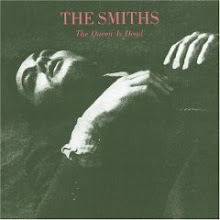
I realize this post has been convoluted with pretzel-like logic. I still think that iTunes and MP3s have changed the way I consume music, but I can't quite articulate the real difference between my earlier self and my present self. Maybe it's more about how I've always had two ways of consuming music, and that iTunes has served to make me more aware of that fact. But I don't want to slip so completely into my iTunes library never to recall alternate ways of how to love music. I should really take my vinyl copy of The Queen is Dead out and listen to it while lying on the floor like I used to a few years back. Maybe everything would make sense again.


From Blown Speakers - The New Pornographers

Turn It Up - Robots in Disguise

Saturday, August 9, 2008

MP3 Blogs vs Music Blogs: Part II


Largely unbeknownst to me, it seems my last, rather informal, post on the differences between music blogs with MP3s and those without became a wee bit of a meme (let's put it this way - I got far more mentions on other blogs, feeds and sites than I ever had before and would ever had expected from my cobwebby corner of cyberspace). Now that my MA thesis on MP3 blogs' rhetoric and social meaning is finished, and now that I've thought myself into a nervous breakdown of sorts, I have a few more opinions about this topic that I came to while finishing the behemoth.

Before I explore my own arguments a little further, I would like to address a few different opinions that seemed to emerge in reaction to my earlier post. Firstly, I found a post from incidentals and accidentals, which took issue with the fact I said posting music that you didn't like would be a waste of time, especially for those who write music blogs for a hobby. This blogger's exact words were:

This is the line of thinking that always really burns me. All the kvetching about the sheeplike tendencies of mp3 blogs is precisely related to the fact that so many bloggers think it’s a waste of time to talk about stuff they don’t like. More specifically, to articulate why something isn’t good, beyond a mere “this sucks” lobbed into a comments box or message board. It’s not a waste of time, particularly if you value the fact that people are regularly reading your blog. Dislikes give shape to likes. The fact that someone might be able to explain why they think one artist is shit might add weight to an argument for another artist’s strengths. I’m not saying you have to get into compare-and-contrast lists, but regular readers will grow to know and trust your tastes.

Oh and the whole thing about text-heavy bloggers being largely professional critics - Personally I’m an exception to that idea, and I know there are plenty of other exceptions as well. Again it just goes to this whole idea of people not wanting blogging to be “a waste of time” - as if one can’t write seriously about music for fun, sans paycheck. That is the hobby! Putting an mp3 online is not a hobby, it’s an impulse.

This is an interesting point - dislikes do throw your likes into relief. Perhaps to clarify my "waste of time" comment, I could argue that posting MP3s of music you hate seems counterintuitive ("Please take the time to download and listen to this song that I just provided a solid argument against listening to"). I'll be looking into the significance of MP3s as a medium later in this post. However, just as I can't assume that everyone writes positively about music (which I don't), no one else can assume that bloggers should write some negative reviews, or in fact, that they all do. I've come across many blogs who do either or both, showing that time and time again, MP3 blogs cannot be lumped together into one general genre of media. It's pretty much impossible to make any generalizing statement at all - the same blog can be different things between different posts. Like this blogger from incidentals and accidentals says, there are too many exceptions. There is also an implication in this blogger's argument that a certain type of MP3 blog is more valuable and "truer" to the genre than others, these "others" being those who just post MP3s rather than write text-heavy opinions or criticism; that those who just post MP3s are less thoughtful, less perceptive, and somehow acting on a lower, more instinctual level than one of higher, intellectual deliberation. This implication points once again to purpose, which I will get to shortly.

I also had a couple of interesting comments left on the post itself, one of which provided a link to Nevver, an MP3 blog which just posts photos and MP3s without any text, implying rather than explicitly stating connections between the two forms of art. This example takes MP3 blogs to their extreme conclusion, where words are no longer necessary. Another comment was also very helpful in that it drew a line between MP3 blogs being the new radio whilst music blogs are discussion and opinion, comparing MP3 bloggers to DJs. Together, these comments really got me thinking about why people create and maintain MP3 blogs, and the connection between how they do it and why they do it.

Now, after sorting out some rather ridiculous Kenneth Burke Dramatistic ratios about MP3 blog rhetoric, I learned a few things. The most significant one is that MP3 blogs are in no way a cohesive body with the same purposes; these purposes, however, do vary depending on which media the MP3 blogger favours to remediate, in other words, the agency he/she utilizes to convey his/her purpose and act. But how does the purpose affect the choice of agency? Or is it the other way around with the agency affecting the purpose, and then the act itself? I'm inclined to believe and argue the latter.

Let me track back a bit to remediation, which is how a medium re-uses and re-interprets a different medium. Remediation can work backwards and forwards, meaning that television is a remediation of film, which came before it, but it can also increasingly be seen in terms of interactivity, as a remediation of the Internet, which came after television. I see MP3 blogs as a remediation of the diary, music journalism/criticism, fanzine, pirate/alternative radio, and mixtape. These are the media, with their attendant purposes, that shape the purposes of MP3 blogs.

The diary element of MP3 blogs affects the purpose by making it personal and reinforcing the affective relationship between the blogger and the music he/she is writing about. This diary remediation shifts commentary into a subjective rather than objective direction, and serves to highlight the newer development of blurring between public and private, which combines self-disclosure with self-promotion. The self-promotion characteristic innate in blogs, evidenced by site traffic meters and inclusion on aggregators, is one that can gain a lot of criticism, especially when traffic and attention becomes the primary motive; however, this attitude presupposes that MP3 blogs as a genre should be something purer of motive, where only the music matters, which is an assumption that ignores the inherent and inherited diary element remediated in the blog medium. Even if one doesn't believe they're promoting him/herself along with the music featured, the very fact the blog is made public and that there is the concern for appearing trustworthy and credible, including having enough subcultural capital, makes the MP3 blog a site of self-promotion.

The music journalism/criticism remediation is one on which those who believe in an MP3 blog revolution would depend. With the access that the Internet brings, amateur writers can research and publish their own pieces about music. It is too simple to say that MP3 blogs have replaced or will replace traditional music journalism, and the fact this remediation is also bound up with public relations/promotional remediation and self-promotion makes it less clear-cut a substitution. The fanzine remediation is connected to the rather positive impulse of celebrating and promoting music that one loves, which I mentioned in the earlier post, and to a more subcultural purpose, supposedly working against and in spite of the mainstream media, promoting artists who don't get promotion through mainstream channels. However, it is also too simplistic to think that MP3 blogs are actually sticking it to the man, even if their rhetoric says they are. The symbiosis of mainstream media and subcultural media is too much a part of subculture as a concept for MP3 blogs to exist in an alternative vacuum, shunning all mainstream media. Even in defining oneself against mainstream media (ie: criticizing NME in a post), one uses and depends on the mainstream for identity and position.

The remediation of the aural media of radio and mixtape is very signficant in that it brings collection, selection, and organization into the foreground of MP3 blog purpose rather than commentary and opinion. Like DJs and mixtape makers, MP3 bloggers attribute meaning to which music they collect and then to how they present it, often without text. While the radio remediation allows for brief background and commentary about tracks (as opposed to lengthy criticism and commentary), the mixtape remediation actually offers music to blog vistors like a word-of-mouth gift - the receiver not only gets to listen to it, but gets to keep it. The mixtape remediation is pervasive in both MP3 blog content and the musical end of the Internet, including sites like Muxtape and technology like Mixas, emphasizing the fanatical impulse for collection, selection, and arrangement along with love and passion for music as motive. Ultimately, MP3 blogs are a bricolage of media that came before them, making them rather slippery to define as a genre.

While it becomes difficult to classify MP3 blogs as a genre based on purpose, the one aspect that does hold the genre together is the MP3s themselves. Regularly posting MP3s on your blog simply makes your blog an MP3 blog. MP3s themselves are fundamental to the medium of MP3 blogs. To get all McLuhan on you, "the medium is the message," and in this case, the MP3 is largely the message. In the Burkean sense, if every selection of reality is both a reflection and a deflection, making most statements, textual or not, rhetorical and/or persuasive, then the mere selection that MP3 blogs employ by choosing the MP3s they feature for download automatically deflects other choices, implying preference and value to music without having to explicitly state anything negative. Or positive. Or to state anything at all. The very act of selection is persuasive, and is made even more salient by the fact MP3 files are included. In this way, MP3s speak and argue for themselves just as other non-verbal elements like images can. Furthermore, blogs, which are of course actually "web logs," have an inherent filter/selection function in which hyperlinks act as both evidence and a record of "pre-surfed" and pre-approved information. Rather than convince by authority and "unquestionable" sources alone, which journalists and critics depend on, bloggers convince by providing a way for their readers to participate in the information they consume, assuming a more active role. With this in mind, MP3s are the primary links provided in MP3 blogs, providing support for the blogger's claims, and their very existence argues for pre-approved content.

Ultimately, MP3 blog influence is far less than many bloggers would believe it is or like it to be. While aggregators like The Hype Machine and Elbows do collect and reify disparate blogs, giving the impression of power and solidarity, they do not set the agendas as much as they would imply. For the most part, the most popular MP3 blogs are reactive rather than proactive in music selection. Unless more bloggers actually exclusively search out new, mostly unsigned, artists and collectively promote them to the point they "break" into the consciousness of those outside of the music blogosphere, they cannot be said to have all that much power to change the system already in place.

We cannot herald the MP3 blog as the substitute for music journalism/criticism, nor for radio, because in remediation, it is much more and much less depending on which aspects are focused upon. For as many people as have access to the Internet there are as many opinions, especially about what MP3 blogs should be, and more importantly, what they should do. I fully acknowledge this plurality, and whether bloggers use MP3 blogs to criticize, to promote, to share, or to express themselves, they are collectively an organism still growing and changing. And since the Internet is a fickle medium, turning attention into one of the rarest commodities, all MP3 bloggers can hope for is their slice of a fragmented, but loyal audience that believes in the purpose presented. Whatever purpose that may be. I, for one, am still thinking about it.

Saturday, July 5, 2008

MP3 Blogs vs. Music Blogs: Different Purposes?


My thesis has got me thinking a lot about music blogs' purpose lately. In my research, I stumbled across a music blog symposium, which included participants like Maura Johnston of Idolator, music journalist/critic Simon Reynolds, and music writer Carl Wilson. They discussed the differences between writing about music professionally and writing music blogs more informally. But one of the more interesting bits that may have a considerable effect on my thesis is the response to the fifth question: "Would you agree that the back and forth conversational aspect of the music blogosphere has died down somewhat in the last few years? Any theories as to why?" It was here that the distinction between MP3 blogs and music blogs comes out, a distinction that I originally didn't take much note of. I had started using the terms interchangeably, which I realize now that I shouldn't have done so glibly. Perhaps the inclusion of MP3s does a lot more to a music blog's purpose than I would have expected. What appears to emerge, is a rather firm division between the "old guard" music bloggers and the later crop of MP3 bloggers. Both seem to have their own communities and their own beliefs about what the purpose of a blog dealing with music should be, and it seems rather rare for them to cross paths and/or engage each other. Carl Wilson, who I would consider one of the "old guard," lists reasons as to why dialogue and dialectic have decreased on music blogs, and one of them is MP3 blogs:

MP3 blogs, which turned the music-blog scene into an acquisitive feeding frenzy which spares little time for reflection and contemplation. It’s a shame, as the earliest mp3 blogs such as Said the Gramophone and Fluxblog present an entirely different model, but few are the people who have followed in their model, compared to the here’s-the-latest-leak-with-200-words-of-hype model. The earlier, more criticism-oriented bloggers lost some focus and, more so, I think, have been turned off by all that.

I can see Wilson's point, but at the same time, does this difference between criticism-oriented, text-heavy music blogs and promotion-oriented MP3 blogs point to something deeper? A respect for the primacy of text versus an immediacy provided by non-textual samples? An elitism of bloggers who know more about music than more amateur efforts? Or is it the elitism of intellectuals, so to speak, over the more negative connotations of PR people? If we're all music fans, and writing music/MP3 blogs comes from a fannish impulse, can our purposes vary so much? I'm not sure, but I'm beginning to think there are differences in purpose, and this difference has a lot to do with whether MP3s are included or not.

The inclusion of MP3s does point to a conundrum: why would you post music up for people to sample if you don't like it? For one thing, it's wasting your time, and if you're a blogger who maintains a music blog as a hobby, wasting time on music you don't like seems silly. Secondly, why would a reader read your bad review of the music and then decide to give the music a try anyway? The second way MP3s are affecting bloggers' purposes is via the MP3 blog aggregators like The Hype Machine and Elbows, which function either completely or nearly completely because of MP3 links in each blogger's posts. The focus, especially on The Hype Machine, is definitely the MP3s over the text accompanying them - the tracks are the most prominent text on the home page of the aggregator, dwarfing the text around it. To be included, and thus to be more easily found by others (a concern of nearly all bloggers because as much as bloggers say they blog for themselves, they are writing in a public space, thus ostensibly seeking some sort of attention), a blogger has to include MP3s. This is one of the reasons I hadn't really stumbled across music blogs without MP3s in my earlier travels in cyberspace. In a way, aggregators force MP3s to become the attraction for the audience rather than the text first. This is not to say that people don't subscribe to MP3 blogs for what the blogger writes and his/her style because several of the MP3 blogs I've come across are worth reading for the calibre of writing alone; however, I also admit that I can flit from blog to blog on the basis of MP3 selection alone, often without reading the blurb accompanying the links.

I suppose the distinction between MP3 blogs and music blogs boils down to a difference in rhetorical approaches - with music blogs the readers are being persuaded about issues and arguments about music, whereas MP3 blogs are persuading readers to sample and purchase certain artists' music. I would say, though, that in both cases, the blogger him/herself also wants to persuade readers to visit his/her blog and validate him/her along with the blog itself.

Early in my research, I hypothesized that MP3 blogs are places where one can create music criticism/journalism with the immediacy of samples unavailable to those operating in print, but now I wonder if they are more often primarily promotional tools for both artists and the bloggers themselves. In the end, blogs vary so much that I can't state anything definitively or too generally. I have observed, however, that MP3s have seemed to increase the number of bloggers who post in a slapdash manner in order to be the first to post a particular track or to follow the frenzy over a particular artist, but perhaps the audiences for these types of blogs want quantity over quality in posts, so they can form their own opinion about the music posted rather than engage with lengthy textual opinions. They prefer their music in bites and bytes just like their regular consumption of other information.

Maura Johnston answered the aforementioned symposium question slightly more positively than Carl Wilson:

with the rise of the MP3 blog and the idea that a person doesn’t need to write about a record in order to communicate what it sounds like, the space hasn’t become just for critics–while there are some great writers running blogs that have MP3s and music samples on them, there’s also been a rise in blogs that are much more enthusiasm-driven and interested in sharing music directly, without any verbal clutter. There’s a definite divide between the two generations of music bloggers, with a few people (Matthew Perpetua of Fluxblog, Sean at Said The Gramophone) straddling it.

What is the impact of no "verbal clutter"? What would happen if MP3 blogs became more and more about posts with links to YouTube clips and a couple of free MP3s (The Music Slut comes to mind)? Do these things mean something on their own without words? This approach takes selection of reality quite literally, and could end up becoming a debate on orality and literacy. Are MP3 blogs more oral and music blogs more literate? Maybe so. After all, MP3 bloggers most closely remediate word-of-mouth and mixtapes, which belong within oral culture rather than literate culture. And if this is the case, do MP3 blogs foster a different sense of community and solidarity whereas music blogs encourage deeper individuality and value logical thought?

I can't help but notice that most of the music blogs without MP3s and the most criticism-oriented approaches are written by people who also write about music professionally. For these bloggers, blogging is an extension of their career, where they don't have to worry about editors and word counts; in contrast, for MP3 bloggers, I think blogging becomes more of an act of subversion and an expression of power within a market they don't have control over. And all this thinking has gotten me wondering what my purpose for this blog is. And whether I'm even fully aware of the purpose or could ever be fully aware.

So far, I think I've leaned towards the MP3 blog tendency to write about music I actually like and endorse, rather than criticize music and/or other people's opinions of it. I think this is only the third post to deal with music as an issue and argument to be explored, and I think I've only criticized music in a negative fashion four times in the six months I've been running this blog (a criticism of The Long Blondes' latest album, this year's Brit Awards, the Manics' cover of Umbrella, and the Tokyo Police Club gig I went to). For me, I think the issues mentioned earlier (time constraints and not feeling the need to post links to music I don't like) are the most obvious reasons. Then again, to be honest, I also post MP3s to gain some extra attention I likely wouldn't without them. My blog isn't on The Hype Machine, so I have no idea how being on it would affect traffic to my site, or whether that would even matter so much, especially if most traffic was to download the MP3s and move on. I quite value any comments I do get and any emails I've received from both artists and readers thus far.

The idealistic side of me, to some extent, has deliberately tried to post about bands who are either unsigned or independently produced because I know it's less likely they'll get promotion via more mainstream channels. I've also tried to maintain integrity in terms of what I post about - I don't post music just because I've been asked to (as guilty as I sometimes feel about ignoring requests). These sorts of things help me sleep at night. But there are times when I wonder if I should be posting more complex posts or deeper insights with a critical slant or not. Am I restricting myself and my personality by only posting positive things about music I like? I'm still unsure.

I've seemingly used this blog far more personally than I originally intended, for better or for worse - my relationship with music seems too deeply rooted in my personal life to extract it more objectively. I'm also one of those people who expresses him/herself much more effectively in writing than in speaking, so writing is important to me - I don't think I could ever be one of those blogs that just posts MP3s and YouTube clips. There's always that part of me that's been an attention-seeker, too - I identify with Andy Warhol, who once said he wanted to be famous and gain everyone's attention, but once he got their attention, he didn't know what to do with it. I seem to need attention while shunning the awkward interactions that ensue from said attention, and blogging fulfills these requirements quite nicely. Again, if I'm completely honest, I do want any readers (all four of you out there) to trust me and value my judgement and taste just as much as I want them to support the musical artists I'm promoting. I know my impact and influence is miniscule, but I guess it's my proactive way of battling the frustration over the music covered in the music press.

MP3-free music blogs like Blissblog, K-Punk, and Pop Life are intimidating to me because as music-crazy as I think I am, I'm definitely not in their league. I don't write about music for a living, and have always shied away from it because I've never been secure enough about my music knowledge, and I can't imagine going head-to-head with the people who write this seriously about music.

Has this gotten me any closer to an answer to my thesis? I couldn't say at this point. I have become more self-aware about my own purposes, mind, and that's a start.

Monday, June 16, 2008

This Is the Industry, But For How Long?: Thoughts on the State of Music Today


It's undeniable that the world of music is changing, and along with it, the industry that has accompanied it ever since the music publishing boom and the likes of Tin Pan Alley. The twentieth century made music more of a commodity than it had ever been before, and now the twenty-first century is seemingly tearing all of that down. I feel like discussing all of these thoughts here, so it can serve as a bit of a brain dump for the ideas that have been floating around my head ever since I started my MA thesis on music blogging and music journalism. As sustained arguments and their attendant research tend to do, this thesis has led me well beyond my original hypotheses and topics. And all this expansion into other areas is about to tear my brain into its separate hemispheres.

With the advances of digital technology, the world has seemingly both exploded and imploded in a McLuhanesque way. Privacy and publicity have morphed into "publicy" and the alternative has effectively blurred into the mainstream. So many people have more access to ideas and commodities, and at the same time, many people are putting more of their ideas and products out there. I consciously use "commodity" and "product" differently - to me, commodities are primarily there to be bought and sold for financial gain while products can be creative results produced for the sake of those producing them with or without financial gain. This distinction is significant for me because I feel as though music is moving from being a commodity back into being a product, and those who depend on it being a commodity, are the ones most upset about this shift.

Due to the emergence of the MP3 file and fast Internet connections, music now freely circulates the globe, both legally and illegally. The music industry itself was slow to realize and anticipate this fact, and will probably forever pay the price. As I mentioned in an earlier essay on digital music, the medium does transform the message, and in the case of the Internet and music, the medium is multiplying and fragmenting the message. Because making, promoting and distributing music has become so democratic (technology and software in combination with the Internet has made it quite possible for anyone to create and promote their own music), there is a proliferation of music, bands, and artists out there in cyberspace. So many, in fact, that it would likely cause you brain damage if you tried to listen to them all. You also can't possibly know about them all. One look at MySpace and you can hear them all screaming for your attention, for their fifteen minutes. MySpace has made Warhol Nostradamus.

With the glut of music, worthy or not, the market for music has both exploded into fragmentation and imploded into solipsistic subcultures and subgenres solidified by the smaller communities who support them. Musicians used to depend on a major label deal to gain global publicity and popularity - even the bastions of DIY, the punks, all ended up selling out to the majors. Now musicians are able to promote themselves globally, but often within a sliver of society - definitely not to the heights of bloated stadium pomposity.

The danger of having so many people claiming to be musicians and claiming that their music is worth listening to and/or buying is that people become overloaded and apathetic. This has already happened in the realm of politics and news. If there's too much music out there, most people cannot be bothered to care and take the time to figure out which artists they actually like. Mainstream media serves a purpose for those people who are casual music fans by literally telling them who to adore and whose music they should purchase. Mainstream media, which includes television, advertising, and regular Top 40 radio, selects the reality these fans see and hear. In the latter half of the twentieth century, music journalists came into the music scene to help influence those who weren't as likely to be convinced by mainstream media and the popular music it was flouting. They became more discerning selecters of music reality and those music fans who were more than casual looked to these journalists as their tastemakers.

Now here we are in the twenty-first century, the irony and skepticism of the 1990's still fresh in our minds, and the big media pundits have only gotten bigger and swallowed up smaller ones, while consumer markets have shattered into thousands of slivers. Casual music fans are being influenced by media conglomerates, passively consuming the next bland music act, while true music fans are being smothered by the choices offered by the Internet. These people who are truly passionate about new, innovative music, have largely abandoned traditional music fan publications. The NME, which used to be the tastemaker for rabid music fans, is now the most maligned piece of music press out there. Because music publications like the NME cannot and/or will not keep up with the explosion of new music that anyone with an Internet connection can find for themselves, they are becoming increasingly obsolete for those who are passionate about music. But even these truly passionate music fans need help in this sea of undiscovered music talent, and so step in music bloggers.

Music bloggers, or MP3 bloggers as they are also known, are the new tastemakers with a word-of-mouth style rather than the official, paid stance of a journalist. These disparate voices in the wilderness of cyberspace have now also been united by music blog aggregators like The Hype Machine and Elbows, making the disparate seem unified. These aggregators can generate little waves of hype for artists as they crawl the Internet for new music blog posts and reveal who has been blogged about the most at that particular moment. Is this hype having an impact in today's fragmented market? It can be difficult to gauge. In looking at some traditional music publications, it seems music bloggers can have an effect on the music press that they are slowly and quietly subverting. Spin featured Vampire Weekend on their cover before the band even had an album out - instead, their popularity and worth was based primarily on the hype generated by music bloggers. At the same time, I know for a fact that most people I know do not even know what a music blog is, let alone religiously check aggregators and music blogs for information. In effect, music bloggers often seem to be preaching to the converted, and the ostensible unity shown via aggregators is an illusion of solidarity, where music blogs serve various fragments of music fan audiences. If there is a soldiarity amongst all these blogs, it comes from being a solid genre with tacit rules and conventions. And perhaps this sort of solidarity will eventually change the face of music journalism.

As more of the mainstream public become aware of music blogs, maybe they will serve a larger purpose than they currently do. In a world wary of advertising and continual corporatization of the Internet's freedom, music blogs provide a way for music to exist outside of a commodity-driven framework. Most music bloggers use a distinct discourse about music, a discourse which puts love and passion about music above all other goals. They want to share music that has touched them or meant something to them with their friends, and because of the blog medium they use, they also end up sharing that music with the world.

And they do literally share this music with their audiences. Music blogs feature a few tracks for free download with every post, allowing their audiences to sample music before making a decision to purchase and/or support live gigs. This practice points to a new way of consuming music - it is no longer the commodity it once was. Because of the onslaught of new music available, much of it not terribly good, true music fans have become more selective than before, they have had to become more selective in this current explosion of bands and artists. This provision of free music, legal and often not, has been one of the contentious issues surrounding the music blogosphere, but in light of other filesharing issues like torrents, they are hardly worth the RIAA's batting of an eyelash.

The fuss about illegal sharing of music and copyright violations just leads me to another question about whether music should even be the commodity it once was. It isn't a coincidence that the first law about copyright and intellectual property came about in the eighteenth century when capitalism was moving into full swing. Music itself, whether it is an intangible file stored on a computer or a groove on a record, has rarely been particularly lucrative for the artists themselves. Most of the money made on album sales is sucked up by the record label. If a musician was going to make any significant amount of money, touring live shows would be the most effective way of doing so. Of course the arguments put forth by music labels and the RIAA always conveniently sidestep these facts.

It has also been pointed out before that many artists, including writers and visual artists, cannot support themselves by their art alone, so any musicians who believe millionaire stardom is their birthright need to re-think things. Perhaps music itself shouldn't be viewed as a commodity anymore. Perhaps it needs to be seen as art once again in order for it to make sense in this brave new world. I, myself, am a firm believer in abolishing the whole middleman music industry. Those musical artists who can grasp and hold onto fans' attention will continue to do so without interference from bottom-lines and media blitzes.

Music blogs are just an increasingly more visible portion of a seachange in the way music is created, promoted and consumed. There are so many other Web sites and platforms out there that are promoting a democratization of music tastemaking. Sites like MOG, Last.fm, muxtape, and The Sixty-One, are all ways to share your impeccable music taste with the world, and in cases like The Sixty-One, the concept of choosing who the best artists are becomes entertainment itself. Ordinary fans are increasingly taking the place of A&R people, and even festival promoters are taking note of this.

With the proliferation of music-makers, corporate-sponsored events are becoming just as ubiquitous and overwhelming as the waves of new bands on MySpace. It seems every mobile phone provider hosts a music festival, and looking at many of the line-ups, very few of them deviate from the same roster. However, more and more are attempting to get fans involved in choosing those bands who get to participate, including the Green Man Music Festival and their Green Poll (http://www.thegreenmanfestival.co.uk/greenpoll) and Benicassim Festival and their contest via Supajam (http://www.supajam.com/contests/fasttrack/home.html), yet another music social networking site. Whether all this A&R frenzy at being the first to discover a new band is actually productive or not, time will tell. Yet another danger of music blogs and their online offshoots is the hyper-speed of music discovery, where finding obscure music and being the first to post about it becomes the sole goal, barring any actual commentary or connection to the music being promoted. And in the end, posts like these disrupt the music discourse set up by music bloggers in the firstplace, making them less of an alternative to and subversion of the traditional music press.

Where is all this heading? I don't have a clue. And that's probably why I find it so fascinating and chose it all as a topic for my thesis. For the most part, music bloggers don't promote music for money, nor do they do it at the behest of record labels (unless they feel the music warrants it), and they don't have editors to please and/or contend with. These facts about music blogs can very likely change in the future as each new medium topples the next, and for some music blogs maybe these facts have already changed. But as it currently stands, music blogs are at the frontlines of music, wading through the mind-boggling masses of music out there and separating the wheat from the chaff for the benefit of those who have otherwise grown completely apathetic in the face of such choice. Too much choice can end up eroding any interest at all and weakening people's passions. Music blogs will hopefully continue to make sure this doesn't happen. Music is a special, affective art form (the most affective one for me, personally), and it deserves a promotional medium that matches that. Not another commodity-driven "industry."

Glamorous Indie Rock & Roll - The Killers

This is Industry - Calvin Harris

Saturday, April 12, 2008

The Medium is the Music: An Essay on Digital Music

I realize that this post may be a bit lazy, but I'm in the process of writing a take-home exam this weekend for my social semiotics class, and I'm a wee bit panicked at the moment. So, I decided I would post an essay I wrote for a previous media studies take-home exam because it involves music and new media. It may seem a bit too academic for a blog post, but I think it's a relevant topic for those who are interested in music and the study of media in general. The question for this exam was to discuss the following Wired article about Universal and its CEO Doug Morris and their being completely unprepared for new media in the music world: http://www.wired.com/entertainment/music/magazine/15-12/mf_morris . In addition, we were supposed to reference Neil Postman's book Technopoly and Mark Poster's book Information Please. It was actually one of the more fun essays I've ever written.

The Medium is the Music

Seth Mnookin’s article about Doug Morris, the CEO of Universal Music Group, reveals how the music industry’s major, and costly, mistake was its inability to understand the nature of digital media in relation to traditional analog media. This error extends to the music industry’s misunderstanding of the Internet as a medium as well. Mnookin demonstrates how not only did Morris err in failing to recognize the changes that digital music and peer-to-peer sharing would pose, but he also initially responded in a way that attempted to control a medium - through lawsuits against Yahoo, YouTube, and MySpace for using Universal music videos without paying for them, and through charging Microsoft’s Zune Marketplace for using the Universal back catalogue - that cannot be controlled by traditional means, and perhaps not at all. As Mnookin notes, “the more restrictions you put on your files, the more you encourage customers to turn to illegal services to get songs the way they want them.”

Mark Poster views the potential of the Internet and peer-to-peer music downloading as having two possibilities: “an Orwellian extension of governmental and corporate controls or a serious deepening of the democratization of culture” (193). In Mnookin’s article, it appears that Morris and Universal Music tends to favour the former more than the latter. Because Universal’s goal is to increase profit, and because its primary way of achieving this goal is through selling music, Morris ostensibly still sees peer-to-peer downloading of music as theft. Poster argues that the Recording Industry Association of America (RIAA), who also view MP3 sharing as theft, was making errors in their understanding of media differences: “In their suit of September 2003, the RIAA acted as if downloading music files is the same thing as taking a music CD from a retail store without paying for it. This claim of equivalence is a political move that ignores the specificity and differences of each media – CDs and digital files. When the CD is taken from the store, the store no longer has it; when the file is downloaded, the person sharing the file still has it” (189). Morris’s “blasting MP3 players as merely ‘repositories for stolen music’” makes the same assumption as the RIAA, an assumption which does not make sense in that digital objects like MP3s are copied, not actually stolen in the traditional sense of theft. This issue also complicates and evades traditional copyright law. Poster states: “Copyright law covered the medium in which inventions or acts of genius were embedded for reproduction” (197). However, now that the medium has changed from traditional ones like printing presses and CD manufacturers to the Internet and its attendant programs, the nature of how production and reproduction function has changed drastically.

In explaining these fundamental shifts, Poster writes: “Digital cultural objects do not fall under the laws of scarcity and the market because they require almost no cost to produce, copy, and distribute, and like ideas they do not diminish when they are given away” (195). In this way, digital cultural objects threaten the capitalist market and those, like Morris, who gain most from it. If music is no longer viewed as a commodity, but instead a public possession that does not require economic power to exist or be distributed, then corporations like Universal seem to be obsolete under this new system: “In short, digitization changes the nature of the producer and the consumer, blurring the boundary between them” (Poster 195-96), and “Digitization threatens the media corporations because one no longer requires great amounts of capital to produce, reproduce, modify, and distribute cultural objects” (198). Mnookin writes that Morris and Universal’s “current moves – DRM-free songs and the Total Music subscription service – aren’t about serving consumers, at least not principally. They’re aimed at taking on Steve Jobs and, specifically, limiting the power of iTunes,” meaning that it appears that Morris has still not completely understood the nature of the new media and how it is changing the capitalist market for cultural products.

Morris insists on continuing to think about competition within the traditional capitalist system, and his long-term competition is not other corporations, but those who understand the new media better than he does – the consumers themselves. Not only is there a serious threat to the cultural corporations of America, but there is a further political link in that, for the US, cultural objects are “second only to defense in export value” (208). If the national economy can no longer support itself through cultural exports like music, the entire country will be affected, and the government may be more likely to try to step in and control media sharing; however, as demonstrated by the control problems experienced by the music industry, there would be great difficulty policing the Internet for media sharing, especially under current laws. The global networked nature of the Internet also poses a dilemma because every country would have to adopt the same laws regarding media sharing, a daunting task, and it would not necessarily safeguard against constant innovation in technology finding ways around these laws.

The constant innovation in the sharing of digital music creates an interesting paradox in which the very foundations of the capitalist system are the cause of its problems. Despite Morris’s acquiescence with giving music away through Total Music, Mnookin points out: “The irony is that if he decides to base his plans around DRM, Morris will be missing the larger truth that has propelled his business for the past 30 years. Ultimately, it’s convenience and ease of use that drive new media formats.” Morris’s attitude demonstrates this paradox in that “If the music industry wins its case against Internet technology, capitalism loses its legitimacy as the bearer of progress” (Poster 190). With the advent of digital media and file sharing networks over the Internet, the progress narrative of capitalism is halted because the advances that appear to be in the processes change the nature of the product; in a McLuhan-like way, the medium becomes the message.

Furthermore, this aspect of the Digital Age has been overlooked by the music industry, and it ensures that process exceeds content in its importance and dominance. Neil Postman argues that “Because of what computers commonly do, they place an inordinate emphasis on the technical processes of communication and offer very little in the way of substance [...] The computer is almost all process” (118). By looking at the issue of digital music sharing in this light, it seems that the computer and the Internet value speed and reach of communication over what is actually being communicated between users; this is not to say that people do not care about the music they listen to, but that they feel entitled to it because of the very process and medium that makes it available to them.

In Mnookin’s article, Rio Caraeff, executive VP of Universal’s digital strategy, says “the company will eventually need to transition from running a product-based business to running a service-based one,” including ringtones, subscription services, and deals with mobile providers. This shift in strategy shows how the attempted control over the products, which are arguably the content of the medium, has been shifted to control over the form of the medium; in effect, Universal realizes that music and many other cultural products are no longer physical, tangible commodities, and their existence is both fluid and public. This issue also raises the question of what happens when something becomes part of the public domain, and with the Internet, what is actually public? As Poster demonstrates with his discussion of internet identity theft, everything tends to become externalized through the medium of the Internet, radically changing the perceptions of privacy and the public domain.

Besides the loss of profit for the corporation, the music industry’s main argument against peer-to-peer file sharing is that it is also violating artists’ royalty benefits. Poster gives three reasons to refute this argument: it is not necessarily true that artists receive compensation for the reproduction of their work, file sharing does not mean the sale of commodities, and the artists themselves have “borrowed” from others in the creation of their art (201-02). He also argues that most of the royalty money an artist earns is taken by production costs, and that distribution of an artists’ music has not been a fair process before file-sharing in that radio stations and DJs were often bribed to play certain artists on heavy rotation (205). The “unfairness” of file-sharing is unfair to the industry only because it negatively affects the industry itself and has nothing to do with popularity being an indication of music’s status as an art form.


The recent tactic employed by Radiohead in allowing their fans to choose the monetary value of their latest album poses an interesting alternative to current music download practices and raises particular issues about the capitalist market and the value of cultural objects. Since Radiohead was no longer attached to a contract with a major label when they released their latest album, they chose to release their album as a download and those who wanted it could pay any amount they deemed worthy of the album, including paying nothing. The average price chosen by those who purchased the album turned out to be £5 (approximately $10 US), which perhaps places the album at a slightly lower price than it would have sold at conventionally; however, considering the record company was not involved, thus not making money from it, the band likely made more profit per album than by selling it through a major label, which would have taken a higher percentage of each total, thus increasing the price presented to consumers. Also, there may have been a higher percentage of people who paid a considerably lesser price than the average, but would have illegally downloaded it for free elsewhere otherwise. A tactic like this may not have worked as successfully without a high-profile band with an established, strong fanbase, but it does change the way in which people think about music and other cultural products. By allowing consumers to assign their own worth to a cultural product, Radiohead relinquished the control that Morris and Universal refuse to.

There also many bands with profiles on MySpace, who are either unsigned or are signed to a truly independent label or distributer rather than an “independent” branch of a major label. In these bands’ cases, they remove the middleman of a major label and sell their music directly to their fans. Because music production technology has also become more available and relatively cost-efficient to use, many artists no longer need a major label to pay for studio time or producers. The role of major labels as having promotional clout is also waning with the amount of buzz being generated by either the artists themselves or independent music bloggers. Most recently, an independent act named IAMX (www.iamx.co.uk), which is based in Europe, managed to tour successfully throughout North America without any promotion outside of their Internet networks and “street teams” composed of fans. In effect, they have cut out the need for a major label for production, distribution, and promotion. While Morris and Universal have chosen to attempt “an Orwellian extension of governmental and corporate controls,” artists as diverse as IAMX and Radiohead are embracing “a serious deepening of the democratization of culture.” The difference lies in the recognition and understanding of the new media and its inevitable effect on capitalism and culture.

Nude - Radiohead

House of Cards - Radiohead

We're in the Music Biz - Robots in Disguise