Showing posts with label music blogs. Show all posts

Tuesday, January 6, 2009

Am I a Music Snob?: A Matter of Taste


This post is a response, or a riposte of sorts, to the teacup-sized tempest incited by my piece on Christmas number ones. You see, there were no negative comments on my own original post, but when my friend, JC, over at The Vinyl Villain decided to be hugely kind by re-posting it on his blog, comments flew in quite quickly and the majority of them were of the lambaste persuasion. I was frankly quite surprised and baffled, but JC, being the noble blogger he is, defended me several times before conceding that maybe he and I are in the minority when it comes to X-Factor singles, Christmas number ones and the complacency of the masses. Now, I don't have any particular hard feelings about the negative things that were directed at me (the very nature of public writing is the need for a tough skin), but I feel impelled, at the very least, to defend myself a bit and in the process, hopefully, provide some more clarity about my argument and thoughts. And at the same time, I can address some ideas I've been wanting to write about anyway. Whether this will end up digging me into some deeper chasm or not remains to be seen.

One of the most prevalent charges laid against me was that I was a music snob or elitist. Snobbery and elitism are present in every facet of life, especially in the realm of cultural or artistic objects like visual art, films and books, but perhaps are most rampant and rabid in the area of music. Music snobbery or "hipsterdom" is maybe as visible as it is because music is an omnipresent art that large amounts of the population enjoy, and the more fanatic people get about music, the more in-fighting and one-upping can occur. You can call it the Pitchfork Syndrome: a two-pronged phenomenon that takes in both the über-hipster persona of Ryan Schreiber and friends and the mob-like attitude to run either a critic or artist out of town. Like every other preference in the artistic world, music taste is used for both self-definition and group affiliation. People have a need to identify themselves in relation to the world around them - there wouldn't be so many personal profiles, blogs and widgets on-line if this weren't true. Humans have an innate sense of judgement and binary formation; by judgement, I mean a constant, often subconscious, impulse to classify people and things, and by binary formation, I mean a capacity to see everything in terms of opposites and contrasts. We want to be able to process information and our environment, and in order to do so, we often take shortcuts in pre-judging others and labelling as best we can before filing them away in our brains. It's not because we're hateful or petty - it's because we're human. Though some people are just hateful and petty, but that's a matter for a different time.

Ambiguity doesn't always sit well, and despite how much we try to fight binarism, it creeps in because we simply have no other way of talking about things in relation to each other. One of the first concepts we learn as children is opposites. For a further example of binaries at work, I took a course in 18th century literature that looked at the issue of sexual disguise and gender ambiguity; I completely understand the need for multiplicities in gender and sexual identity, but to say that it helps to create a theory called "female masculinity," doesn't completely work. Within that theory is the assumption that there are still fundamental differences between femininity and masculinity, but the theory needs this binary in order to make its point. So as to not completely digress myself senseless, I think that in order to discuss music, it is often inevitable that one classifies certain music as mainstream or alternative, and certain music as good or bad. Or at the very least, not as good as the good music. This is what music obsessives and critics do. There is no inherent value to any piece of art - despite endless arguments about aesthetics and high/low culture, the value is in what a piece means to people. Having said that, people, especially obsessives, classify and judge people by their tastes, and I think that most people align themselves with those of similar tastes and proclivities. It may not be guaranteed that I will not become friends with someone who loves Il Divo, obsessively watches hockey, or reads a lot of romance novels, but if they do all three, that likelihood increases along with the probability that I will not be able to have a very long conversation with him/her. That is how taste functions.

According to others, my suggestion that Jeff Buckley's version of Hallelujah was better than Alexandra Burke's is deeply flawed. Oddly enough, it's flawed because some of the people who commented see Buckley in the same light as Burke: singers whose cover versions released on a major label. Fair enough; however, I would argue that despite being on a label aiming to sell as many albums as possible, Buckley still comes at the song from an entirely different angle, and though time can be the only judge, I think Buckley's version is the timeless, unique one. Anyhow, at the heart of my previous argument was not some objective truth about who produced the best version of Hallelujah - it was about how each version made me feel. I acknowledge it's a completely subjective stance, but everything is subjective. No, no one put a gun to my head to listen to Burke's version, but I thought it was only fair to listen to it and then make a judgement rather than follow a knee-jerk reaction to an X-Factor cover of a classic song. It just so happens I truly didn't get anything out of Burke's version and I felt like her's missed the point of the song. I don't believe that Cohen's song is meant to be a schmaltzy power ballad.

I would also like to impress upon people that I do not love Buckley and his music because he drowned in a river in his 20s, nor even because he had the range of Pavarotti; I love his music because it means something to me and because it feels as though it meant something to him. Since I value Buckley's music independent of others' opinions about it, I could have cared less if Buckley ever made it back into the charts for Christmas or any other time; rather, I just think it's a little sad that the masses seem to enjoy stampeding without really thinking and without a real point (it's like everyone buying a copy of The Secret, the book on positive thinking that was preposterously popular a couple years ago, only to have the remainder forgotten in the bargain bin a few months later). Additionally, it's interesting that it seems Buckley's own post-humous fame and martyrdom have appeared to make him, on some level, just as mainstream as Burke, and now it gains someone more subcultural capital to reference Kathryn Williams. I had actually not been aware of Williams nor her version, but upon listening to her Hallelujah, I like it, especially for the fragility I think the song requires, but I will still never love it the way I do Buckley's. And that is merely an issue of taste, ergo, I will not think those who prefer Williams' version to Buckley's are snobs.

Some of my detractors claimed that I sounded like them when they were teenagers; this response makes me wonder whether expressing a critical opinion is only for the young. To be perfectly honest, I wasn't all that critical of the music industry as a teen; in fact, I rode wave after wave of Top 40 pop and rock for a few solid years (most music fans and friends I know now wouldn't have even talked to me then). Looking back at myself during that period actually confuses me because I cannot really connect with 90% of the music I loved then, and I often try to understand what kind of person I was and why I made the choices I did. All I can conclude is that I was still looking around and trying on different ideas and tastes to see what stuck, and like many adolescents, I was often influenced by my closest friends or the most immediate media sources. And maybe I had a pretty sheltered, naive outlook longer than others might have. Admittedly, I also never thought too much about what I was consuming, a realization that makes me much more aware now; life experience changes perceptions, and along with them, taste. As I aged, I kept growing and formulating my personality, and eventually, I ended up with what I would call my taste foundation - I may continue to shift and add to/subtract from the specifics that lie on top, but I don't think I will ever discard or waver from that established core of preferences in music, books, and films. I will never love a Shopaholic book, nor will I ever stop loving the Manic Street Preachers (the latter being a preference that is rarely fashionable).

For the most part, I don't bother raging against taste quibbles with the NME, Top 40 radio, or even MTV; when I do complain, my beef with them usually comes in with the amount and/or variety of music they deal with. And even then, my rants come in sporadic spurts as I negotiate some kind of bi-monthly bile. Most of the time I write about what I like in the hopes that I might expose someone else to something he/she may also like, and sometimes I might actually entertain at the same time - it just so happens I'm often at my most entertaining when I'm ranting. To rail against entities I don't even usually partake in seems pretty futile when I keep this blog as a hobby.

As for the counterarguments against a perceived connection between being comfortable and having a crap taste in music, I'd like to clarify here: I said that the news story I was watching connected economic crisis with comfortable music purchases, and in fact, I didn't agree with that assessment. I stated that the majority of people buying mass-marketed music purchase out of comfort nearly all of the time, regardless of economic situation. There's no doubt that economic crises often incite very artistic music; believe me, I'm well aware of the history of punk, post-punk/new wave, etc., and social circumstances shape music just like they do any other art form. However, in making the argument that it was significant that people were pushing music like that of the Sex Pistols into the Top Ten, one is already making a value judgement about music - in essence, that the Sex Pistols and punk (or Blondie, The Pretenders, et al) are better than some other type of music, including what can be termed "pop" music. The people pushing certain well-known bands and their albums into the top are often people who might only buy a few CDs in a year, and who spend their time on things other than searching for music beyond mass media sources. They are what I would consider casual music fans or listeners in contrast with the music fanatic category, in which many music bloggers fall into. Perhaps it was errant to call the latter category "real" music fans in my earlier post; I was trying to get at the fact that those who take a much more active and/or obsessive interest in music -and, thus, in looking harder for music that doesn't get advertised or marketed the same way popular music does - need alternative channels, which I firmly believe the Internet has allowed for. The music industry is changing slowly but surely, and as a music fan, I want to be part of that rather than support a dead horse that is beating itself to death.

I would also like to address the fact that it seems people think I equate people who like mainstream music to slobbering, acquiescent idiots. I apologize if that's how it came across; there's no point making generalizations in the first place - there will always be numerous exceptions to a rule and reams of anecdotal evidence. I do think that a more general attitude towards being comfortable can be affected by smaller acts of comfort and complacency that reach a critical mass. Having read too much Neil Postman and Aldous Huxley, I can't just perceive entertainment as innocuous anymore, and all I really want is for people to think more and to take a less passive role in the information, including entertainment, they consume. What my whole issue with Christmas number ones, X-Factor and mass market music all boils down to is the predictability of it all. I will always view complacency and aversion to new things as stifling, and in some political cases, a dangerous thing. There's a time to unwind and feel mindless, and maybe exposing the inner machinations and manufactured hype of the music industry in reality shows like X-Factor is actually some new form of Pop Art or the television equivalent of the Pompidou Centre, but my fear is that too many people never think about it that way and that too many would rather stay in a state of amused mindlessness all the time.

Should I never express a critical opinion of music I don't like or see value in? I hope not. Ultimately, we're all a little hypocritical when discussing snobbery because having opinions and interests that you feel strongly about will inevitably pit you against other people with strong opinions and interests, and in pitting yourself against someone else, you are attempting to argue that your choice is superior to another's. If you don't have any opinions or interests, you're likely not going to be accused of being a snob, but then again, you won't have much of a personality either. There's also a part of me that thinks music fans, or fans of any sort, enjoy bantering over obscure trivia and feeling different from those who would never understand. I'm not and never will be one of the "cool" kids (any glance between my blog and countless other more popular ones will tell you that), but I don't aspire to be. If there is anything negative attached to hipsterdom, it's the artificiality of it - pretending to be or like things you don't just to appear either forward-thinking or cool. I'm wary of hype not because I'm afraid of looking like an unoriginal bandwagon jumper, nor because I worry about looking out-of-step with hipsters, but because I've been disappointed too many times and sometimes time is the only thing that can provide me with clarity. And at the very least, I'd like to be honest about my tastes. In the end, I'm glad that people challenged me because it made me think a lot harder about what I was trying to say and it helped me refine it.

If loving the music I love or expressing my opinions in the way I do make me a music snob or an elitist, then I'll just have to accept that. And after all, the beauty of the Internet is the fact that you have choice, so in the event I'm too offensive, you definitely don't have an obligation to read my blog or listen to the music I post. Hopefully, the one thing we can all agree on is that we take music seriously. In some cases, too seriously.

And as for my choice of diction in the earlier post...artless and artificial are not actually redundant when the former means without skill or finesse and the latter means manufactured or insincere. But there's no point nitpicking, is there?

Hipsters Are the New Jocks! - MESH

Cool Scene - The Dandy Warhols

Saturday, November 1, 2008

Read All About It


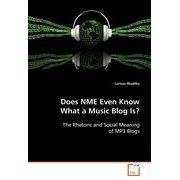
Through life's strange twists and online accessibility, my MA thesis, Does NME Even Know What a Music Blog Is?: The Rhetoric and Social Meaning of MP3 Blogs (see earlier post), is now available as a book published by VDM Publishing. That's the good news. The perhaps not-as-good news is the fact it is priced at $64 US - I have officially become a part of the artificially inflated academic book market. Currently, the only place where it actually appears to be in stock is on Amazon US and Target, and is listed, but not yet in stock on Amazon UK and Amazon Germany. I definitely don't intend to get rich from this, but at least it feels like I didn't sacrifice a chunk of my sanity for nothing, and I still feel the current technological climate of the music industry and its counterpart of music journalism is a fascinating area that needs far more exploration, academic and otherwise. It's exciting to think that I've contributed in some way to this global dialogue, especially since I couldn't find any secondary academic sources about MP3 blogs when I was researching. It's funny how, as a child, I always imagined my first published book would be a novel - then again, I also thought I'd grow up to be both a scientist and an artist.

At any rate, this will likely be the first and last time you'll find me tooting my own horn, so to speak. I'd much rather promote other people, which I suppose I did inadvertently in the book as I used numerous examples from MP3 blogs and their aggregators. However, as I tended to argue in the book, promoting others really comes down to some sort of self-promotion anyway. I'm ready to go back to the more imperceptible kind.

Monday, October 27, 2008

Sound the Last Post, Then Unite and Take Over


I, like many MP3 bloggers, am deeply disturbed by the information gathered on a post over at The Vinyl Villain. JC has collected links to the following posts that all address the current censorship and bullying that is taking place in the MP3 blogosphere:

To Die By Your Side Post
Song, By Toad Post
Teenage Kicks Post
17 Seconds Post

I encourage you to read them all because each of them provides a slightly different insight into the rash of MP3 blog post removals, specifically by Google's Blogger. I would also like to add a couple of my own links to relevant stories, including this story about Metallica and the Muxtape story. Now, as many of you know, I've been studying MP3 blogging with a fair amount of depth this past year, and as far as I could tell, most MP3 bloggers appeared safe from legal action because of the ephemeral nature of most download links, because of their disclaimers about asking for removal of MP3s, and because of the fact that as long as they posted only a few MP3s, and not full albums, they were operating under the following "fair use" clause of the Copyright Law:

"Notwithstanding the provisions of sections 106 and 106A, the fair use of a copyrighted work, including such use by reproduction in copies or phonorecords or by any other means specified by that section, for purposes such as criticism, comment, news reporting, teaching (including multiple copies for classroom use), scholarship, or research, is not an infringement of copyright. In determining whether the use made of a work in any particular case is a fair use the factors to be considered shall include—

(1) the purpose and character of the use, including whether such use is of a commercial nature or is for nonprofit educational purposes;

(2) the nature of the copyrighted work;

(3) the amount and substantiality of the portion used in relation to the copyrighted work as a whole; and

(4) the effect of the use upon the potential market for or value of the copyrighted work.

The fact that a work is unpublished shall not itself bar a finding of fair use if such finding is made upon consideration of all the above factors."

As evident through the above bloggers' stories, this safety net has been torn from under us. Now there are talks of blogs disappearing and/or going underground (ie: email subscription services), but what I fail to understand is what record labels hope to gain by attacking MP3 blogs. Have they heard of torrents? Is it because it's easier to target a bunch of relatively small static entities rather than massive networks whirling around the globe? To treat MP3 blogs and their offshoots as though they're the same as the P2P filesharing frenzy started by Napster in the late 90s, is utterly ridiculous. There are so many flaws in these actions on the part of both major record labels and Google, but I would like to point out a few pertinent ones.

Firstly, how can archaic copyright laws be applied to drastically new developments in technology? How can you steal something whilst leaving it with the person you "stole" it from? This process is one of cloning, not of physical products leaving one spatial location to be in another. And after being in academia so long, I know the copyright law well enough - of course you can't photocopy a whole book, but you can definitely copy portions that you need for your studies. The reason why this analogy doesn't quite work is because photocopying a book would be a lot more time-consuming than downloading and burning an album or several. But I would like to point out the fact that research and epistemological processes have been built upon the foundation of citation. You cannot write an academic piece of literature without references, citations and examples from previous works to bolster your argument. Well, MP3s are bolstering our arguments. We are not plagiarizing entire books, we are providing our examples. Consider our MP3 links to be inside quotation marks.

Ideas and art do not spring from a vacuum. This is the civilized world that literacy ushered in. Once thoughts and information could be recorded for reference, they could be easily used to continue building on, generating a sense of progress. Science and technology themselves couldn't have gone anywhere without the free flow and dissemination of information. Knowledge generates knowledge, and by preventing access to ideas and cultural artifacts, big businesses are only killing civilization as we know it. However, when you take a look at the history of communication, we are merely repeating it. When the printing press became more widespread, copyright laws were created by those that feared losing power, and restrictions were placed on who could produce printed news and books, but eventually, progress broke the elitist hold and the presses were opened again. This is not to say that censorship isn't alive and well and that "free" societies are actually completely free and democratic.

In the current state of the world, it is becoming increasingly apparent that information is the new power, not military. Wars shall be fought with information and gathered intelligence - knowledge is indeed power. Chomsky and Herman's Propaganda Model makes the point that journalism is greatly shaped and filtered by restricting means of production and communication to only those who have the financial means to do so. These filters are firmly entrenched in the world of journalism, so much so that they tend to be invisible to most people. I suggest you read Manufacturing Consent to illuminate this fraudulent concept of freedom of speech. My worry is how these filters will eventually find their way from the world of "official" journalism to the world of "unofficial" journalism. In some ways, they already have. For those without the money for a computer or high-speed Internet, MP3 blogging wouldn't be an option in the first place. But soon the privileged, but non-elite people who maintain MP3 blogs could be silenced, too. If more of the financial elite get control over the Internet and its applications, the supposed freedom of online communcation and creation will completely disappear. My only hope is that there will continually be innovative people one step ahead, using their individual brains and sources of knowledge.

The issue here is primarily MP3s - I highly doubt blogs that merely discuss music without free downloads are being targeted in the same way. In many ways, MP3s are art, but they are also literally encoded information, so by stopping bloggers from using a few samples, music labels are obstructing the flow of information and attempting to curtail individuals thinking for themselves. Music fans are gaining power through being able to sample before buying, so record labels need only fear if their artists aren't good enough to convince people to purchase their product. It's hard to believe that the people in charge of the music industry have any business acumen at all with the absurd strategies they're using. These strategies include the hidden Copyrighting Board Private Copying Tariff on the prices of blank audio cassettes and blank CDRs.

Secondly, it seems mad that record labels haven't learned from their first go-round in which they fought the very technology that affected the future of their industry/commodity. Now, they're fighting the future of music publicity. It's like reaching for the bail bucket on the Titanic. The removal of MP3 blog posts is a pyrrhic victory for the music industry and a classic case of the music industry gnawing on the hand that feeds it. To attack people who have provided disclaimers and expired links, is an exercise in futility and ends up infringing on the property of others. And these others are the "real" music fans -the ones who actually buy music and go to live shows as opposed to the casual music fans who don't care whether they get all their music from torrents and who will likely never be the target market for excessive music buying.

It appears that Coxon of To Die By Your Side could have been targeted because he wrote a critical review of Cold War Kids' latest album. Well, I did, too - here. And perhaps one of the reasons I haven't had my post removed yet is because I'm still flying under the radar and not generating huge traffic. I, like most other bloggers, have had plenty of positive feedback from the artists themselves, who are happy that their art is being exposed to the public by people who are just as passionate about it as they are. Unlike the music industry, and to an increasingly greater extent, the music journalism industry, many MP3 bloggers view music as art, not as strictly a commodity. If the music industry is so in tune with the laws of capitalism, they should recognize the moment when a business has to adapt or die - that moment has already come and gone, but the industry has found no viable solution for itself; thus, industry people busy themselves by bullying those that can't feasibly fight back so that they can feel proactive rather than the lumbering retroactive people they are.

Fear generates fear. The obsolete middlemen in the music industry are fearing for their livelihoods, and are thus using fear tactics upon both blog hosts like Google and MP3 bloggers. I refuse to be fearful. If and when it comes to sounding my last post, I, along with other music fans, will find a new way of communicating because the process that literacy set in motion cannot be stopped. If we are to be viewed as shoplifters, then all I have to say is: Shoplifters of the world unite and take over.


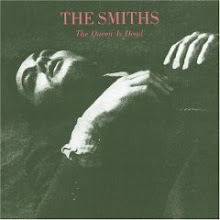
Shoplifters Of the World Unite - The Smiths

Can the Haves Use Their Brains - McCarthy

Thursday, September 11, 2008

Does NME even know what a music blog is?: The rhetoric and social meaning of MP3 blogs


Well, here's the fruit of my four hardcore months of labour: my MA thesis on MP3 blogs. I had a few qualms about posting it here for download, not for intellectual property rights (because that would be rather ironic given the content of the thesis), but because I still feel there's so much more to be done and I know I could potentially have more reactions and responses than I can handle. For those who download and read it, bear in mind, I needed to make an argument of some sort, so I can understand there will be counterarguments and/or disputes with what I came up with, especially from those bloggers who have far more experience in the actual act of blogging than I do. Having said that, I will appreciate any and all comments and criticisms (unless of course you all pick up your pitchforks and run me out of the blogosphere). At any rate, it seems the powers that be have signed off on this thesis (thankfully, without any requests for revisions), and I think I'm in the clear to graduate with my MA degree. What comes next is anyone's guess...

Does NME even know what a music blog is?: The rhetoric and social meaning of MP3 blogs (Megaupload)

And some song treats to help the academia go down:

College - Johnny Boy

A Strange Education - The Cinematics

Saturday, August 9, 2008

MP3 Blogs vs Music Blogs: Part II


Largely unbeknownst to me, it seems my last, rather informal, post on the differences between music blogs with MP3s and those without became a wee bit of a meme (let's put it this way - I got far more mentions on other blogs, feeds and sites than I ever had before and would ever had expected from my cobwebby corner of cyberspace). Now that my MA thesis on MP3 blogs' rhetoric and social meaning is finished, and now that I've thought myself into a nervous breakdown of sorts, I have a few more opinions about this topic that I came to while finishing the behemoth.

Before I explore my own arguments a little further, I would like to address a few different opinions that seemed to emerge in reaction to my earlier post. Firstly, I found a post from incidentals and accidentals, which took issue with the fact I said posting music that you didn't like would be a waste of time, especially for those who write music blogs for a hobby. This blogger's exact words were:

This is the line of thinking that always really burns me. All the kvetching about the sheeplike tendencies of mp3 blogs is precisely related to the fact that so many bloggers think it’s a waste of time to talk about stuff they don’t like. More specifically, to articulate why something isn’t good, beyond a mere “this sucks” lobbed into a comments box or message board. It’s not a waste of time, particularly if you value the fact that people are regularly reading your blog. Dislikes give shape to likes. The fact that someone might be able to explain why they think one artist is shit might add weight to an argument for another artist’s strengths. I’m not saying you have to get into compare-and-contrast lists, but regular readers will grow to know and trust your tastes.

Oh and the whole thing about text-heavy bloggers being largely professional critics - Personally I’m an exception to that idea, and I know there are plenty of other exceptions as well. Again it just goes to this whole idea of people not wanting blogging to be “a waste of time” - as if one can’t write seriously about music for fun, sans paycheck. That is the hobby! Putting an mp3 online is not a hobby, it’s an impulse.

This is an interesting point - dislikes do throw your likes into relief. Perhaps to clarify my "waste of time" comment, I could argue that posting MP3s of music you hate seems counterintuitive ("Please take the time to download and listen to this song that I just provided a solid argument against listening to"). I'll be looking into the significance of MP3s as a medium later in this post. However, just as I can't assume that everyone writes positively about music (which I don't), no one else can assume that bloggers should write some negative reviews, or in fact, that they all do. I've come across many blogs who do either or both, showing that time and time again, MP3 blogs cannot be lumped together into one general genre of media. It's pretty much impossible to make any generalizing statement at all - the same blog can be different things between different posts. Like this blogger from incidentals and accidentals says, there are too many exceptions. There is also an implication in this blogger's argument that a certain type of MP3 blog is more valuable and "truer" to the genre than others, these "others" being those who just post MP3s rather than write text-heavy opinions or criticism; that those who just post MP3s are less thoughtful, less perceptive, and somehow acting on a lower, more instinctual level than one of higher, intellectual deliberation. This implication points once again to purpose, which I will get to shortly.

I also had a couple of interesting comments left on the post itself, one of which provided a link to Nevver, an MP3 blog which just posts photos and MP3s without any text, implying rather than explicitly stating connections between the two forms of art. This example takes MP3 blogs to their extreme conclusion, where words are no longer necessary. Another comment was also very helpful in that it drew a line between MP3 blogs being the new radio whilst music blogs are discussion and opinion, comparing MP3 bloggers to DJs. Together, these comments really got me thinking about why people create and maintain MP3 blogs, and the connection between how they do it and why they do it.

Now, after sorting out some rather ridiculous Kenneth Burke Dramatistic ratios about MP3 blog rhetoric, I learned a few things. The most significant one is that MP3 blogs are in no way a cohesive body with the same purposes; these purposes, however, do vary depending on which media the MP3 blogger favours to remediate, in other words, the agency he/she utilizes to convey his/her purpose and act. But how does the purpose affect the choice of agency? Or is it the other way around with the agency affecting the purpose, and then the act itself? I'm inclined to believe and argue the latter.

Let me track back a bit to remediation, which is how a medium re-uses and re-interprets a different medium. Remediation can work backwards and forwards, meaning that television is a remediation of film, which came before it, but it can also increasingly be seen in terms of interactivity, as a remediation of the Internet, which came after television. I see MP3 blogs as a remediation of the diary, music journalism/criticism, fanzine, pirate/alternative radio, and mixtape. These are the media, with their attendant purposes, that shape the purposes of MP3 blogs.

The diary element of MP3 blogs affects the purpose by making it personal and reinforcing the affective relationship between the blogger and the music he/she is writing about. This diary remediation shifts commentary into a subjective rather than objective direction, and serves to highlight the newer development of blurring between public and private, which combines self-disclosure with self-promotion. The self-promotion characteristic innate in blogs, evidenced by site traffic meters and inclusion on aggregators, is one that can gain a lot of criticism, especially when traffic and attention becomes the primary motive; however, this attitude presupposes that MP3 blogs as a genre should be something purer of motive, where only the music matters, which is an assumption that ignores the inherent and inherited diary element remediated in the blog medium. Even if one doesn't believe they're promoting him/herself along with the music featured, the very fact the blog is made public and that there is the concern for appearing trustworthy and credible, including having enough subcultural capital, makes the MP3 blog a site of self-promotion.

The music journalism/criticism remediation is one on which those who believe in an MP3 blog revolution would depend. With the access that the Internet brings, amateur writers can research and publish their own pieces about music. It is too simple to say that MP3 blogs have replaced or will replace traditional music journalism, and the fact this remediation is also bound up with public relations/promotional remediation and self-promotion makes it less clear-cut a substitution. The fanzine remediation is connected to the rather positive impulse of celebrating and promoting music that one loves, which I mentioned in the earlier post, and to a more subcultural purpose, supposedly working against and in spite of the mainstream media, promoting artists who don't get promotion through mainstream channels. However, it is also too simplistic to think that MP3 blogs are actually sticking it to the man, even if their rhetoric says they are. The symbiosis of mainstream media and subcultural media is too much a part of subculture as a concept for MP3 blogs to exist in an alternative vacuum, shunning all mainstream media. Even in defining oneself against mainstream media (ie: criticizing NME in a post), one uses and depends on the mainstream for identity and position.

The remediation of the aural media of radio and mixtape is very signficant in that it brings collection, selection, and organization into the foreground of MP3 blog purpose rather than commentary and opinion. Like DJs and mixtape makers, MP3 bloggers attribute meaning to which music they collect and then to how they present it, often without text. While the radio remediation allows for brief background and commentary about tracks (as opposed to lengthy criticism and commentary), the mixtape remediation actually offers music to blog vistors like a word-of-mouth gift - the receiver not only gets to listen to it, but gets to keep it. The mixtape remediation is pervasive in both MP3 blog content and the musical end of the Internet, including sites like Muxtape and technology like Mixas, emphasizing the fanatical impulse for collection, selection, and arrangement along with love and passion for music as motive. Ultimately, MP3 blogs are a bricolage of media that came before them, making them rather slippery to define as a genre.

While it becomes difficult to classify MP3 blogs as a genre based on purpose, the one aspect that does hold the genre together is the MP3s themselves. Regularly posting MP3s on your blog simply makes your blog an MP3 blog. MP3s themselves are fundamental to the medium of MP3 blogs. To get all McLuhan on you, "the medium is the message," and in this case, the MP3 is largely the message. In the Burkean sense, if every selection of reality is both a reflection and a deflection, making most statements, textual or not, rhetorical and/or persuasive, then the mere selection that MP3 blogs employ by choosing the MP3s they feature for download automatically deflects other choices, implying preference and value to music without having to explicitly state anything negative. Or positive. Or to state anything at all. The very act of selection is persuasive, and is made even more salient by the fact MP3 files are included. In this way, MP3s speak and argue for themselves just as other non-verbal elements like images can. Furthermore, blogs, which are of course actually "web logs," have an inherent filter/selection function in which hyperlinks act as both evidence and a record of "pre-surfed" and pre-approved information. Rather than convince by authority and "unquestionable" sources alone, which journalists and critics depend on, bloggers convince by providing a way for their readers to participate in the information they consume, assuming a more active role. With this in mind, MP3s are the primary links provided in MP3 blogs, providing support for the blogger's claims, and their very existence argues for pre-approved content.

Ultimately, MP3 blog influence is far less than many bloggers would believe it is or like it to be. While aggregators like The Hype Machine and Elbows do collect and reify disparate blogs, giving the impression of power and solidarity, they do not set the agendas as much as they would imply. For the most part, the most popular MP3 blogs are reactive rather than proactive in music selection. Unless more bloggers actually exclusively search out new, mostly unsigned, artists and collectively promote them to the point they "break" into the consciousness of those outside of the music blogosphere, they cannot be said to have all that much power to change the system already in place.

We cannot herald the MP3 blog as the substitute for music journalism/criticism, nor for radio, because in remediation, it is much more and much less depending on which aspects are focused upon. For as many people as have access to the Internet there are as many opinions, especially about what MP3 blogs should be, and more importantly, what they should do. I fully acknowledge this plurality, and whether bloggers use MP3 blogs to criticize, to promote, to share, or to express themselves, they are collectively an organism still growing and changing. And since the Internet is a fickle medium, turning attention into one of the rarest commodities, all MP3 bloggers can hope for is their slice of a fragmented, but loyal audience that believes in the purpose presented. Whatever purpose that may be. I, for one, am still thinking about it.

Tuesday, July 22, 2008

Has the World Changed Or Have I Changed?: Musings on the New Musical Express Train to Nowhere


I've been meaning to write something about my general feeling of malaise with new music, and now that I've read two very eloquent posts about this same feeling at To Die By Your Side and The Vinyl Villain, I very likely don't need to now because I don't know if I have that much more to add, to be honest. But since I must write something to keep this blog alive, I'll do it anyway. It's my blog and I'll rant if I want to.

I'm twenty-five, so why I feel so jaded about music already is something I would like to try to understand. I agree with what the bloggers above have said about how maturity and acquired knowledge does eventually make music sound less "new" and "innovative"; the more you know about music and music history, the more connections you can make between new and old music. And if there's one thing I had to learn over the years, it's that art of any kind must always use what's come before it in some way. Originality is a flawed concept, and it's a concept that has dogged me for many years as I shied away from writing creatively for long periods of time, believing that I had nothing "original" to say. In fact, I wrote a short story called Life is Art is Life all about that particular conundrum. I realized that it's how you build on what's come before you that makes you special and memorable; no one reinvents the wheel, instead, you get fantastic variations like cars, ferris wheels, and my personal favourite, the pennyfarthing.

As others already noted as well, the music of your youth or the music tied to "new" experiences in your life will always be special to you. It's why there's such a thing as nostalgia. I like to think that there will continue to be new bands that will impress me in the future as I grow old, but at the same time, I don't think they could ever make me feel the way the Manic Street Preachers, The Smiths, The Clash, and New Order do. These artists/bands got to me first and changed my life in their respective ways; for the most part, they ushered me into adulthood. Sadly, only one of them is still around, and through unfortunate circumstances, have had to change from their first, truly brilliant incarnation.

So, have I changed? And is that at the crux of my lack of excitement over most new bands? Likely, that's a big part of it, but at the same time, the music industry and its attendant press has changed rather drastically in recent years. Technology and the Internet have expanded access for both artists and fans, and they've sped up the process of production and promotion. While these developments can be hailed as the next stage of a truly DIY music scene, in a lot of ways, to borrow from Dick Hebdige, they've defused and diffused it. It's become increasingly harder to pick through the sheer masses of artists/bands out there (for my thesis, I made some rough calculations and figured there are at least 450 000 artists/bands with profiles on MySpace). Add to this overwhelming number the erosion of interest via media bombardment, and the situation gets sadder - the more information people are exposed to, the more apathy there is. The brain can only handle so much before needing to defer to others' opinions to make decisions, and in some cases, the brain just shuts out information wholesale in an act of self-defence.

And of course the advent of MP3 blogs and their aggregators have made it quite easy and speedy to hype a new artist based on very little. Of course, if a band is ultimately worthy of praise, they will weather the hype and continue to make interesting music. But this mad rush for the "new thing" has accelerated to such speeds, I can't bother to keep up, and instead, have found refuge in filling out my collection with older bands' back catalogues. Often I end up discovering an old band that I had never heard of before (some blogs can be thanked for this). For example, I only just found out about the post-punk band The Sound this year, and I now consider them one of my favourites. I'm also very aware that the bulk of new music I end up paying attention to is created by artists/bands that have been around for awhile - though, I can often also be disappointed in new output by old artists as stated in my post about The Cure. That's a different discussion for a different time, mind.

At this stage, my modest patch of cyberspace has by no means garnered too much attention by promotional people, but out of the emails of this nature that I have received, I've only been interested in two or three, and only really and truly loved one. As Coxon from To Die By Your Side stated, most bands are just too samey to be worth listening to, let alone worthy of a blog post. I require more than just a new Libertines or Arctic Monkeys, and I am too often disappointed by the comparisons of these new bands to older bands that I love, comparisons which never pan out.

Not only do I have to be critical of the promotional hype I get in my inbox, but I have to be just as critical of the information I get from "professionals." I know I'll sound like some whiny curmudgeon when I say that the music press isn't what it used to be. Sure, in the past, editorial and journalistic styles have displaced that which preceded them, but the recent shifts really don't speak to me. I like to believe that I would have been far more impressed with the work of Lester Bangs and Nick Kent had I been alive at the time they were prominent. I may also have romantic notions of the more politicized, intelligent NME of the early to mid-eighties, considering I was a small child then, but I do long for those times. I read less and less music magazines these days because either their information is out-of-date, or they're too busy chasing the next Libertines/Strokes to care about what really matters in music and the discourse that surrounds it. You will never see as brave a cover as that nearly all-black 1986 issue of NME that discussed youth suicide, nor content as brave. As much as I love The Mighty Boosh, they are merely a sales figure booster for the NME with comedic links to music and Noel Fielding's rather pathetic public antics. I can't imagine the bands being championed in the recent press as being as iconic and meaningful even ten years down the line as bands like Joy Division and The Smiths were/are. And though I don't expect all artists/bands to carve "4REAL" into their arms in order to prove a point to the NME, I do long for those who are willing to stand out and stand by their beliefs and opinions, or frankly, willing to have an opinion at all.

Having said all of this, I will say there have been rare instances when the white noise of bands clamouring for attention has cleared for a moment, allowing me to hear new music that I believe has that capacity to change my life. I believe in these bands and what they stand for; not only do their music and lyrics affect me, but so do their ideologies and philosophies, aspects which make art meaningful. They take the brilliant elements of previous artists, musical and otherwise, and multiply them into something more than the sum of their parts. They are "4REAL" in the same way Richey Edwards once was. And these bands aren't even at their peak yet; there's no reason they should be, and that very fact makes them exciting. These bands are Vanilla Swingers, Stroszek and Black Umbrella, and you can read about them in more detail when you follow the links below.

Post #1 on Vanilla Swingers

Post #2 on Vanilla Swingers

Post on Stroszek

Post on Black Umbrella


These are the bands that will mean something to me in ten years time. These are the bands I would feature on the cover of a magazine purporting to be about "new" music. These are the bands that continue to give me hope that not all good music was in the past.

Goodbye Lennon - Vanilla Swingers

Railway of Bones - Stroszek

Secret Kiss - Black Umbrella

Saturday, July 5, 2008

MP3 Blogs vs. Music Blogs: Different Purposes?


My thesis has got me thinking a lot about music blogs' purpose lately. In my research, I stumbled across a music blog symposium, which included participants like Maura Johnston of Idolator, music journalist/critic Simon Reynolds, and music writer Carl Wilson. They discussed the differences between writing about music professionally and writing music blogs more informally. But one of the more interesting bits that may have a considerable effect on my thesis is the response to the fifth question: "Would you agree that the back and forth conversational aspect of the music blogosphere has died down somewhat in the last few years? Any theories as to why?" It was here that the distinction between MP3 blogs and music blogs comes out, a distinction that I originally didn't take much note of. I had started using the terms interchangeably, which I realize now that I shouldn't have done so glibly. Perhaps the inclusion of MP3s does a lot more to a music blog's purpose than I would have expected. What appears to emerge, is a rather firm division between the "old guard" music bloggers and the later crop of MP3 bloggers. Both seem to have their own communities and their own beliefs about what the purpose of a blog dealing with music should be, and it seems rather rare for them to cross paths and/or engage each other. Carl Wilson, who I would consider one of the "old guard," lists reasons as to why dialogue and dialectic have decreased on music blogs, and one of them is MP3 blogs:

MP3 blogs, which turned the music-blog scene into an acquisitive feeding frenzy which spares little time for reflection and contemplation. It’s a shame, as the earliest mp3 blogs such as Said the Gramophone and Fluxblog present an entirely different model, but few are the people who have followed in their model, compared to the here’s-the-latest-leak-with-200-words-of-hype model. The earlier, more criticism-oriented bloggers lost some focus and, more so, I think, have been turned off by all that.

I can see Wilson's point, but at the same time, does this difference between criticism-oriented, text-heavy music blogs and promotion-oriented MP3 blogs point to something deeper? A respect for the primacy of text versus an immediacy provided by non-textual samples? An elitism of bloggers who know more about music than more amateur efforts? Or is it the elitism of intellectuals, so to speak, over the more negative connotations of PR people? If we're all music fans, and writing music/MP3 blogs comes from a fannish impulse, can our purposes vary so much? I'm not sure, but I'm beginning to think there are differences in purpose, and this difference has a lot to do with whether MP3s are included or not.

The inclusion of MP3s does point to a conundrum: why would you post music up for people to sample if you don't like it? For one thing, it's wasting your time, and if you're a blogger who maintains a music blog as a hobby, wasting time on music you don't like seems silly. Secondly, why would a reader read your bad review of the music and then decide to give the music a try anyway? The second way MP3s are affecting bloggers' purposes is via the MP3 blog aggregators like The Hype Machine and Elbows, which function either completely or nearly completely because of MP3 links in each blogger's posts. The focus, especially on The Hype Machine, is definitely the MP3s over the text accompanying them - the tracks are the most prominent text on the home page of the aggregator, dwarfing the text around it. To be included, and thus to be more easily found by others (a concern of nearly all bloggers because as much as bloggers say they blog for themselves, they are writing in a public space, thus ostensibly seeking some sort of attention), a blogger has to include MP3s. This is one of the reasons I hadn't really stumbled across music blogs without MP3s in my earlier travels in cyberspace. In a way, aggregators force MP3s to become the attraction for the audience rather than the text first. This is not to say that people don't subscribe to MP3 blogs for what the blogger writes and his/her style because several of the MP3 blogs I've come across are worth reading for the calibre of writing alone; however, I also admit that I can flit from blog to blog on the basis of MP3 selection alone, often without reading the blurb accompanying the links.

I suppose the distinction between MP3 blogs and music blogs boils down to a difference in rhetorical approaches - with music blogs the readers are being persuaded about issues and arguments about music, whereas MP3 blogs are persuading readers to sample and purchase certain artists' music. I would say, though, that in both cases, the blogger him/herself also wants to persuade readers to visit his/her blog and validate him/her along with the blog itself.

Early in my research, I hypothesized that MP3 blogs are places where one can create music criticism/journalism with the immediacy of samples unavailable to those operating in print, but now I wonder if they are more often primarily promotional tools for both artists and the bloggers themselves. In the end, blogs vary so much that I can't state anything definitively or too generally. I have observed, however, that MP3s have seemed to increase the number of bloggers who post in a slapdash manner in order to be the first to post a particular track or to follow the frenzy over a particular artist, but perhaps the audiences for these types of blogs want quantity over quality in posts, so they can form their own opinion about the music posted rather than engage with lengthy textual opinions. They prefer their music in bites and bytes just like their regular consumption of other information.

Maura Johnston answered the aforementioned symposium question slightly more positively than Carl Wilson:

with the rise of the MP3 blog and the idea that a person doesn’t need to write about a record in order to communicate what it sounds like, the space hasn’t become just for critics–while there are some great writers running blogs that have MP3s and music samples on them, there’s also been a rise in blogs that are much more enthusiasm-driven and interested in sharing music directly, without any verbal clutter. There’s a definite divide between the two generations of music bloggers, with a few people (Matthew Perpetua of Fluxblog, Sean at Said The Gramophone) straddling it.

What is the impact of no "verbal clutter"? What would happen if MP3 blogs became more and more about posts with links to YouTube clips and a couple of free MP3s (The Music Slut comes to mind)? Do these things mean something on their own without words? This approach takes selection of reality quite literally, and could end up becoming a debate on orality and literacy. Are MP3 blogs more oral and music blogs more literate? Maybe so. After all, MP3 bloggers most closely remediate word-of-mouth and mixtapes, which belong within oral culture rather than literate culture. And if this is the case, do MP3 blogs foster a different sense of community and solidarity whereas music blogs encourage deeper individuality and value logical thought?

I can't help but notice that most of the music blogs without MP3s and the most criticism-oriented approaches are written by people who also write about music professionally. For these bloggers, blogging is an extension of their career, where they don't have to worry about editors and word counts; in contrast, for MP3 bloggers, I think blogging becomes more of an act of subversion and an expression of power within a market they don't have control over. And all this thinking has gotten me wondering what my purpose for this blog is. And whether I'm even fully aware of the purpose or could ever be fully aware.

So far, I think I've leaned towards the MP3 blog tendency to write about music I actually like and endorse, rather than criticize music and/or other people's opinions of it. I think this is only the third post to deal with music as an issue and argument to be explored, and I think I've only criticized music in a negative fashion four times in the six months I've been running this blog (a criticism of The Long Blondes' latest album, this year's Brit Awards, the Manics' cover of Umbrella, and the Tokyo Police Club gig I went to). For me, I think the issues mentioned earlier (time constraints and not feeling the need to post links to music I don't like) are the most obvious reasons. Then again, to be honest, I also post MP3s to gain some extra attention I likely wouldn't without them. My blog isn't on The Hype Machine, so I have no idea how being on it would affect traffic to my site, or whether that would even matter so much, especially if most traffic was to download the MP3s and move on. I quite value any comments I do get and any emails I've received from both artists and readers thus far.

The idealistic side of me, to some extent, has deliberately tried to post about bands who are either unsigned or independently produced because I know it's less likely they'll get promotion via more mainstream channels. I've also tried to maintain integrity in terms of what I post about - I don't post music just because I've been asked to (as guilty as I sometimes feel about ignoring requests). These sorts of things help me sleep at night. But there are times when I wonder if I should be posting more complex posts or deeper insights with a critical slant or not. Am I restricting myself and my personality by only posting positive things about music I like? I'm still unsure.

I've seemingly used this blog far more personally than I originally intended, for better or for worse - my relationship with music seems too deeply rooted in my personal life to extract it more objectively. I'm also one of those people who expresses him/herself much more effectively in writing than in speaking, so writing is important to me - I don't think I could ever be one of those blogs that just posts MP3s and YouTube clips. There's always that part of me that's been an attention-seeker, too - I identify with Andy Warhol, who once said he wanted to be famous and gain everyone's attention, but once he got their attention, he didn't know what to do with it. I seem to need attention while shunning the awkward interactions that ensue from said attention, and blogging fulfills these requirements quite nicely. Again, if I'm completely honest, I do want any readers (all four of you out there) to trust me and value my judgement and taste just as much as I want them to support the musical artists I'm promoting. I know my impact and influence is miniscule, but I guess it's my proactive way of battling the frustration over the music covered in the music press.

MP3-free music blogs like Blissblog, K-Punk, and Pop Life are intimidating to me because as music-crazy as I think I am, I'm definitely not in their league. I don't write about music for a living, and have always shied away from it because I've never been secure enough about my music knowledge, and I can't imagine going head-to-head with the people who write this seriously about music.

Has this gotten me any closer to an answer to my thesis? I couldn't say at this point. I have become more self-aware about my own purposes, mind, and that's a start.

Monday, June 16, 2008

This Is the Industry, But For How Long?: Thoughts on the State of Music Today


It's undeniable that the world of music is changing, and along with it, the industry that has accompanied it ever since the music publishing boom and the likes of Tin Pan Alley. The twentieth century made music more of a commodity than it had ever been before, and now the twenty-first century is seemingly tearing all of that down. I feel like discussing all of these thoughts here, so it can serve as a bit of a brain dump for the ideas that have been floating around my head ever since I started my MA thesis on music blogging and music journalism. As sustained arguments and their attendant research tend to do, this thesis has led me well beyond my original hypotheses and topics. And all this expansion into other areas is about to tear my brain into its separate hemispheres.

With the advances of digital technology, the world has seemingly both exploded and imploded in a McLuhanesque way. Privacy and publicity have morphed into "publicy" and the alternative has effectively blurred into the mainstream. So many people have more access to ideas and commodities, and at the same time, many people are putting more of their ideas and products out there. I consciously use "commodity" and "product" differently - to me, commodities are primarily there to be bought and sold for financial gain while products can be creative results produced for the sake of those producing them with or without financial gain. This distinction is significant for me because I feel as though music is moving from being a commodity back into being a product, and those who depend on it being a commodity, are the ones most upset about this shift.

Due to the emergence of the MP3 file and fast Internet connections, music now freely circulates the globe, both legally and illegally. The music industry itself was slow to realize and anticipate this fact, and will probably forever pay the price. As I mentioned in an earlier essay on digital music, the medium does transform the message, and in the case of the Internet and music, the medium is multiplying and fragmenting the message. Because making, promoting and distributing music has become so democratic (technology and software in combination with the Internet has made it quite possible for anyone to create and promote their own music), there is a proliferation of music, bands, and artists out there in cyberspace. So many, in fact, that it would likely cause you brain damage if you tried to listen to them all. You also can't possibly know about them all. One look at MySpace and you can hear them all screaming for your attention, for their fifteen minutes. MySpace has made Warhol Nostradamus.

With the glut of music, worthy or not, the market for music has both exploded into fragmentation and imploded into solipsistic subcultures and subgenres solidified by the smaller communities who support them. Musicians used to depend on a major label deal to gain global publicity and popularity - even the bastions of DIY, the punks, all ended up selling out to the majors. Now musicians are able to promote themselves globally, but often within a sliver of society - definitely not to the heights of bloated stadium pomposity.

The danger of having so many people claiming to be musicians and claiming that their music is worth listening to and/or buying is that people become overloaded and apathetic. This has already happened in the realm of politics and news. If there's too much music out there, most people cannot be bothered to care and take the time to figure out which artists they actually like. Mainstream media serves a purpose for those people who are casual music fans by literally telling them who to adore and whose music they should purchase. Mainstream media, which includes television, advertising, and regular Top 40 radio, selects the reality these fans see and hear. In the latter half of the twentieth century, music journalists came into the music scene to help influence those who weren't as likely to be convinced by mainstream media and the popular music it was flouting. They became more discerning selecters of music reality and those music fans who were more than casual looked to these journalists as their tastemakers.

Now here we are in the twenty-first century, the irony and skepticism of the 1990's still fresh in our minds, and the big media pundits have only gotten bigger and swallowed up smaller ones, while consumer markets have shattered into thousands of slivers. Casual music fans are being influenced by media conglomerates, passively consuming the next bland music act, while true music fans are being smothered by the choices offered by the Internet. These people who are truly passionate about new, innovative music, have largely abandoned traditional music fan publications. The NME, which used to be the tastemaker for rabid music fans, is now the most maligned piece of music press out there. Because music publications like the NME cannot and/or will not keep up with the explosion of new music that anyone with an Internet connection can find for themselves, they are becoming increasingly obsolete for those who are passionate about music. But even these truly passionate music fans need help in this sea of undiscovered music talent, and so step in music bloggers.

Music bloggers, or MP3 bloggers as they are also known, are the new tastemakers with a word-of-mouth style rather than the official, paid stance of a journalist. These disparate voices in the wilderness of cyberspace have now also been united by music blog aggregators like The Hype Machine and Elbows, making the disparate seem unified. These aggregators can generate little waves of hype for artists as they crawl the Internet for new music blog posts and reveal who has been blogged about the most at that particular moment. Is this hype having an impact in today's fragmented market? It can be difficult to gauge. In looking at some traditional music publications, it seems music bloggers can have an effect on the music press that they are slowly and quietly subverting. Spin featured Vampire Weekend on their cover before the band even had an album out - instead, their popularity and worth was based primarily on the hype generated by music bloggers. At the same time, I know for a fact that most people I know do not even know what a music blog is, let alone religiously check aggregators and music blogs for information. In effect, music bloggers often seem to be preaching to the converted, and the ostensible unity shown via aggregators is an illusion of solidarity, where music blogs serve various fragments of music fan audiences. If there is a soldiarity amongst all these blogs, it comes from being a solid genre with tacit rules and conventions. And perhaps this sort of solidarity will eventually change the face of music journalism.

As more of the mainstream public become aware of music blogs, maybe they will serve a larger purpose than they currently do. In a world wary of advertising and continual corporatization of the Internet's freedom, music blogs provide a way for music to exist outside of a commodity-driven framework. Most music bloggers use a distinct discourse about music, a discourse which puts love and passion about music above all other goals. They want to share music that has touched them or meant something to them with their friends, and because of the blog medium they use, they also end up sharing that music with the world.

And they do literally share this music with their audiences. Music blogs feature a few tracks for free download with every post, allowing their audiences to sample music before making a decision to purchase and/or support live gigs. This practice points to a new way of consuming music - it is no longer the commodity it once was. Because of the onslaught of new music available, much of it not terribly good, true music fans have become more selective than before, they have had to become more selective in this current explosion of bands and artists. This provision of free music, legal and often not, has been one of the contentious issues surrounding the music blogosphere, but in light of other filesharing issues like torrents, they are hardly worth the RIAA's batting of an eyelash.

The fuss about illegal sharing of music and copyright violations just leads me to another question about whether music should even be the commodity it once was. It isn't a coincidence that the first law about copyright and intellectual property came about in the eighteenth century when capitalism was moving into full swing. Music itself, whether it is an intangible file stored on a computer or a groove on a record, has rarely been particularly lucrative for the artists themselves. Most of the money made on album sales is sucked up by the record label. If a musician was going to make any significant amount of money, touring live shows would be the most effective way of doing so. Of course the arguments put forth by music labels and the RIAA always conveniently sidestep these facts.

It has also been pointed out before that many artists, including writers and visual artists, cannot support themselves by their art alone, so any musicians who believe millionaire stardom is their birthright need to re-think things. Perhaps music itself shouldn't be viewed as a commodity anymore. Perhaps it needs to be seen as art once again in order for it to make sense in this brave new world. I, myself, am a firm believer in abolishing the whole middleman music industry. Those musical artists who can grasp and hold onto fans' attention will continue to do so without interference from bottom-lines and media blitzes.

Music blogs are just an increasingly more visible portion of a seachange in the way music is created, promoted and consumed. There are so many other Web sites and platforms out there that are promoting a democratization of music tastemaking. Sites like MOG, Last.fm, muxtape, and The Sixty-One, are all ways to share your impeccable music taste with the world, and in cases like The Sixty-One, the concept of choosing who the best artists are becomes entertainment itself. Ordinary fans are increasingly taking the place of A&R people, and even festival promoters are taking note of this.

With the proliferation of music-makers, corporate-sponsored events are becoming just as ubiquitous and overwhelming as the waves of new bands on MySpace. It seems every mobile phone provider hosts a music festival, and looking at many of the line-ups, very few of them deviate from the same roster. However, more and more are attempting to get fans involved in choosing those bands who get to participate, including the Green Man Music Festival and their Green Poll (http://www.thegreenmanfestival.co.uk/greenpoll) and Benicassim Festival and their contest via Supajam (http://www.supajam.com/contests/fasttrack/home.html), yet another music social networking site. Whether all this A&R frenzy at being the first to discover a new band is actually productive or not, time will tell. Yet another danger of music blogs and their online offshoots is the hyper-speed of music discovery, where finding obscure music and being the first to post about it becomes the sole goal, barring any actual commentary or connection to the music being promoted. And in the end, posts like these disrupt the music discourse set up by music bloggers in the firstplace, making them less of an alternative to and subversion of the traditional music press.

Where is all this heading? I don't have a clue. And that's probably why I find it so fascinating and chose it all as a topic for my thesis. For the most part, music bloggers don't promote music for money, nor do they do it at the behest of record labels (unless they feel the music warrants it), and they don't have editors to please and/or contend with. These facts about music blogs can very likely change in the future as each new medium topples the next, and for some music blogs maybe these facts have already changed. But as it currently stands, music blogs are at the frontlines of music, wading through the mind-boggling masses of music out there and separating the wheat from the chaff for the benefit of those who have otherwise grown completely apathetic in the face of such choice. Too much choice can end up eroding any interest at all and weakening people's passions. Music blogs will hopefully continue to make sure this doesn't happen. Music is a special, affective art form (the most affective one for me, personally), and it deserves a promotional medium that matches that. Not another commodity-driven "industry."

Glamorous Indie Rock & Roll - The Killers

This is Industry - Calvin Harris